1. Rinhelp
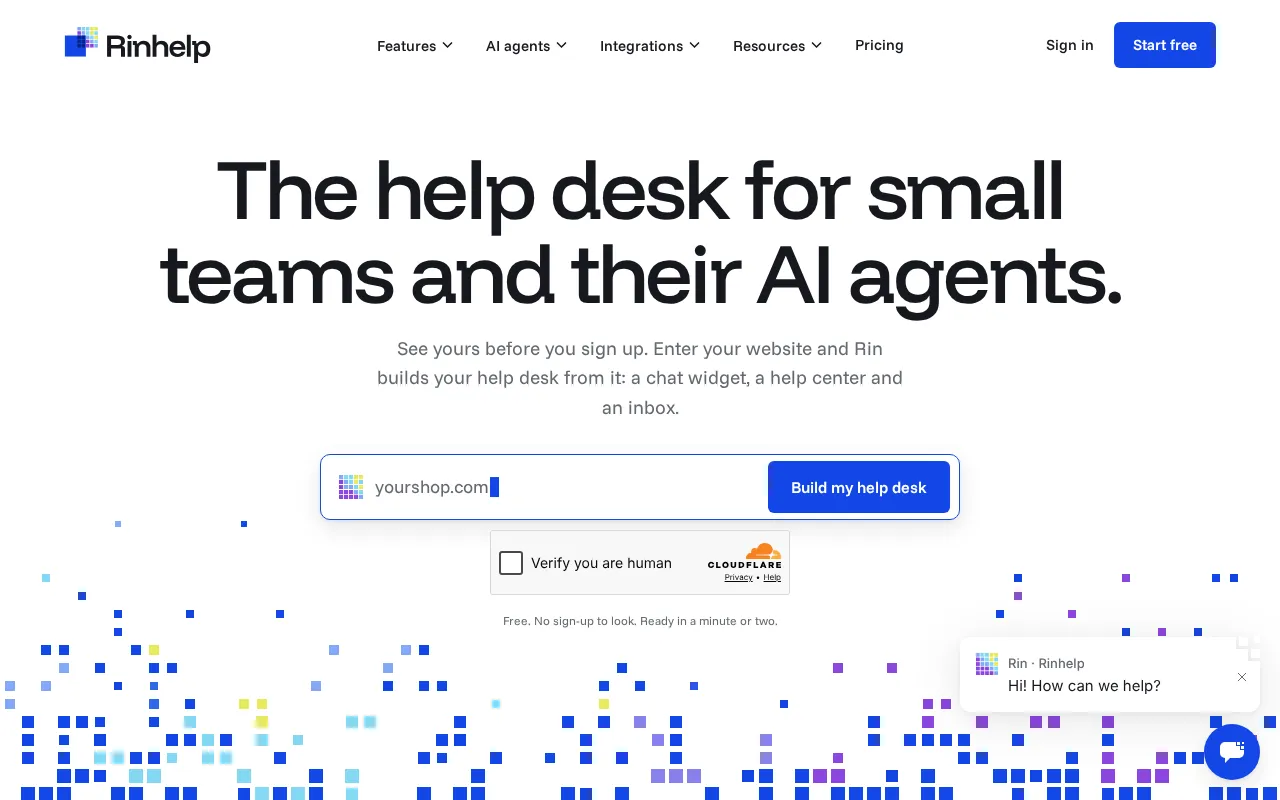
When a subscriber writes in about something they paid for, such as a charge they don’t recognize, a renewal they forgot or a plan they want to stop, the answer is in Stripe. With Stripe connected, Rinhelp finds the subscriber by email, customer ID, or an invoice or receipt number, and lists their subscriptions, latest invoices and payments, each payment with what’s been refunded and a link to its receipt. Rin, our built-in AI, answers the how-to questions from your help center and website, and shares a payment only once the customer gives a receipt number and the email on it, or is signed in on your site. A refund or cancellation Rin asks for becomes an approval a teammate decides. Shopify and Stripe are the only integrations, so App Store and Google Play purchases stay with Apple and Google, and Rinhelp answers email and the chat widget on your website, with no phone, WhatsApp, social inbox or SDK for native apps. It’s $49 a month with 5,000 AI replies, and each reply Rin sends counts as one.
- Best for
- B2C SaaS teams of 2 to 10 that bill consumers on the web through Stripe, field many short questions about charges and cancellations, and want AI answers at one monthly price.
- How it bills
- Free for up to 3 teammates. Pro is $49 a month for the whole workspace, with 5,000 AI replies from Rin. No per-seat or per-resolution fees.
- Free plan
- Yes: 3 teammates, 50 AI replies to try Rin
- 3 people, 300 AI replies
- $49 a month: Pro for the whole workspace, using 300 of its 5,000 AI replies; Free covers your team if you don’t need AI replies.
Pros
- 5,000 AI replies for $49 a month, and a top-up of 5,000 more for $49, so a launch week doesn’t change what each answer costs.
- A subscriber signed in on your site skips the receipt number, since Rin can find their own payments, especially when your site passes their Stripe customer ID.
- A teammate refunds one payment in full or in part, up to what hasn’t been refunded yet, or cancels a subscription so it stops at the end of the period the customer paid for.
- Rin and your own AI agents, such as Claude or ChatGPT, can ask for a refund or cancellation, and nothing moves until a teammate approves it.
Cons
- Email and live chat only: there is no phone, WhatsApp, SMS or social inbox.
- Shopify and Stripe are the only integrations.
- No reports, SLA rules or routing rules: Rin hands a conversation to the teammate with the fewest open ones.
- The free plan has no Rin beyond 50 AI replies to try it.
2. Intercom
Intercom is a customer service help desk with a chat Messenger, a shared inbox, a help center and Fin, its AI agent. Its company renamed itself Fin in May 2026, and Salesforce bought it that September.
Fin answers consumers on chat, email and phone and is charged once per conversation, however many questions a subscriber asks in it. At $0.99 an outcome on top of every seat, a queue of thousands a month adds up, and an outcome counts even when the customer just goes quiet after Fin’s answer.
- Best for
- Software and app companies that want chat, email, phone, WhatsApp and SMS in one inbox, with Fin answering across them.
- How it bills
- Per seat: Essential is $29, Advanced $85 and Expert $132 a seat a month on annual billing ($39, $99 and $139 monthly), and new customers pay $19 for Essential on annual billing. Fin costs $0.99 for each outcome, and WhatsApp, SMS and phone are billed by use.
- Free plan
- No, 14-day trial
- 3 people, 300 AI replies
- $354 a month: 3 Essential seats at $19, the new-customer price on annual billing (list $29), plus 300 Fin outcomes at $0.99.
Pros
- Chat, email, phone, WhatsApp, SMS, Slack, Facebook and Instagram all arrive in one inbox.
- Fin answers on email, live chat and phone, and is charged once per conversation however many questions it answers.
- Agents can refund or cancel a Shopify order from the inbox sidebar, and the Stripe app shows subscriptions mid-conversation.
- Its official MCP server can add internal notes and write and publish help center articles, not only read.
Cons
- Every teammate who replies needs a paid seat, and Fin adds $0.99 an outcome on top.
- An outcome also counts when a customer simply stops asking after Fin’s answer, or when a Fin workflow hands the conversation to your team.
- Its MCP server can’t reply to customers, assign or close conversations, and doesn’t serve workspaces hosted in Australia.
- No free plan, and an annual plan cancelled early gets no prorated refund.
Already on Intercom? See the best Intercom alternatives.
3. Freshchat
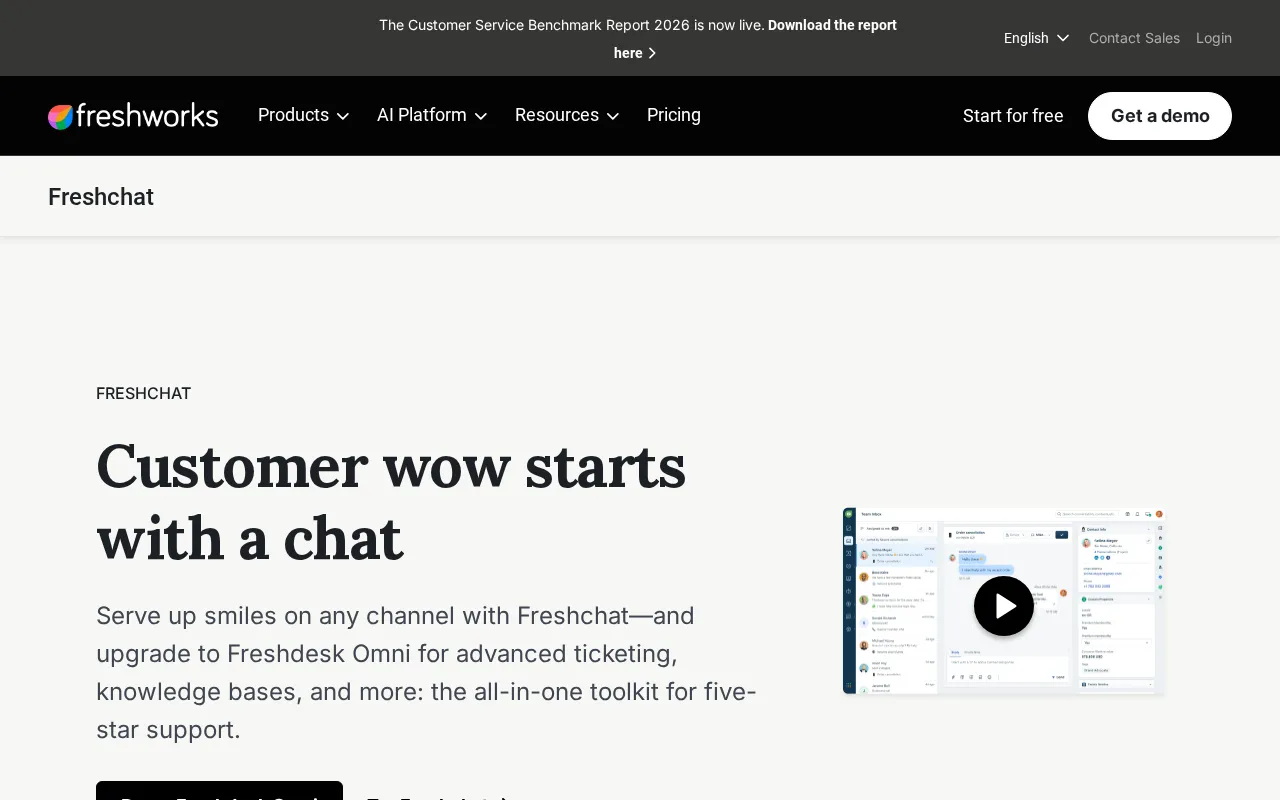
Freshchat is Freshworks’ live chat and messaging tool for websites, mobile apps, WhatsApp and social messengers. Its Freddy AI agent answers customers and is billed per session.
Freshchat’s widget runs on your website and inside your mobile apps, which suits a consumer app whose users write from their phones, and Pro translates chats in more than 45 languages. The free plan covers 10 agents without AI, and Freddy sessions cost 49 cents each after a one-time 500.
- Best for
- Teams that support customers mostly over web and in-app chat, WhatsApp and social messengers, and want a free plan for up to 10 agents to start on.
- How it bills
- Per agent on annual billing: Growth is $19, Pro $49 and Enterprise $79 a month, and Free covers up to 10 agents without AI. Freddy AI agent sessions cost $49 per 100 after 500 free ones, once per account. Copilot is $29 an agent, and voice through Freshcaller starts at $15 an agent.
- Free plan
- Yes: up to 10 agents, chat and email, no AI
- 3 people, 300 AI replies
- $204 a month: 3 Growth agents at $19 on annual billing, with 300 chats answered by its AI agent in packs of 100 at $49.
Pros
- Chat works on your website and inside mobile apps, and Growth adds WhatsApp, SMS, Messenger, Instagram, Line and Google’s business messaging.
- The free plan covers up to 10 agents with the chat widget, a shared inbox and email.
- Pro and Enterprise translate conversations with customers in more than 45 languages.
- Free apps from Freshworks let its AI agent look up Shopify orders, refund or cancel them, and cancel Stripe subscriptions.
Cons
- The free plan has no AI agent, no WhatsApp and no social messengers.
- AI sessions went from 10 cents to 49 cents each in late 2025.
- No official MCP server, and the conversation API comes only with Pro and Enterprise.
- No help center: FAQ articles show only inside the chat widget.
Already on Freshchat? See the best Freshchat alternatives.
4. Help Scout
Help Scout is a help desk with shared inboxes, a Docs help center and Beacon, a widget for chat and help articles. Scout, its AI agent, answers chat from your help content and is billed per resolution.
If a consumer app’s launch can send volume up overnight, Help Scout lets you set a monthly ceiling on AI spending, and Scout switches off once it’s reached. Each resolution is $0.75, free for a new account’s first 3 months, though Scout answers website and in-app chat only, not email.
- Best for
- Support teams that think in tickets and want a calm shared inbox, a help center and live chat, with a free plan to start on.
- How it bills
- Standard is $25, Plus $45 and Pro $75 a user a month on annual billing, which saves 16%. Pro needs at least 10 users and a demo. Scout costs $0.75 per resolution, free for a new account’s first 3 months.
- Free plan
- Yes: 5 users, 1 inbox, 100 contacts a month
- 3 people, 300 AI replies
- $300 a month: 3 Standard users at $25 on annual billing, plus 300 AI resolutions at $0.75.
Pros
- A free plan for up to 5 users, with 1 inbox, a Docs site and 100 contacts a month.
- Agents can refund, cancel or edit recent Shopify orders, and refund Stripe payments or cancel subscriptions, from the sidebar.
- Standard brings email, live chat, SMS, WhatsApp, Instagram and Messenger into one inbox.
- You can cap AI spending each month, and Scout switches off when it reaches the cap.
Cons
- Its official MCP server is read-only: your own AI can search conversations and Docs, but can’t reply, add notes or close.
- Scout answers website and in-app chat only, and lists email as “Coming Soon”.
- Scout can’t look up orders or act in other tools yet: its connection to payment processors and CRMs is still to come.
- Seats and AI are billed separately, so the bill grows with every user and every resolution.
Already on Help Scout? See the best Help Scout alternatives.
5. Zendesk
Zendesk is a customer service suite for email, messaging, live chat, social and voice, with AI agents that answer customers and are billed per automated resolution.
For a subscriber base that calls as well as chats, Zendesk’s Suite puts voice, messaging, WhatsApp and social in one place, its AI agents answer on email, messaging and voice, and an admin can connect them to Stripe’s MCP server. Each agent brings 5 automated resolutions a month, 10 on Suite Professional, then each costs $1.50 committed or $2.00 pay as you go.
- Best for
- Growing and large teams that need voice, many channels, 1,800+ apps and integrations, and enterprise controls to grow into.
- How it bills
- Per agent: Support Team is $19, Suite Team $55 and Suite Professional $115 a month on annual billing ($25, $69 and $149 monthly). Each agent brings 5 automated resolutions a month (10 on Professional), then each costs $1.50 committed or $2.00 pay as you go. Copilot is $50 more an agent.
- Free plan
- No, 14-day trial
- 3 people, 300 AI replies
- $485 a month: 3 Support Team agents at $19 on annual billing, plus 285 automated resolutions at $1.50 committed beyond the 15 included, on email only.
Pros
- Email, messaging, live chat, WhatsApp, social and voice sit in one Suite, and AI agents can answer on email, messaging or voice.
- Its marketplace lists 1,800+ apps, partners and integrations.
- Agents refund and cancel Shopify orders inside a ticket, and an admin can connect Zendesk’s AI agents to Stripe’s MCP server.
- The 14-day trial opens every Suite Professional feature, Copilot included, and startups can get 6 months of Suite free for up to 50 agents.
Cons
- Every agent is a seat, and each automated resolution past the 5 per agent a plan includes costs $1.50 to $2.00.
- No official MCP server for outside AI tools yet: Zendesk announced one in May 2026 for early access and has published no tools for it.
- Data exports are off until the account owner asks support, and the export tools aren’t on Team plans.
- Zendesk gives no refunds or credits for unused seats or time.
Already on Zendesk? See the best Zendesk alternatives.
6. Crisp
Crisp is a French customer support platform built around a website chat widget, with a shared inbox, many messaging channels and Hugo, its AI agent.
From Essentials, WhatsApp, Instagram, Messenger, SMS and Telegram join Crisp’s inbox, where many consumers would rather write. Hugo, its AI, can refund through Stripe once the customer types a one-time code, with no teammate deciding.
- Best for
- Small teams that start with free website chat and want WhatsApp, Instagram, SMS and phone in the same inbox later.
- How it bills
- Per workspace a month: Mini is $45 with 4 seats, Essentials $95 with 10 and Plus $295 with 20, including $5, $25 and $75 of AI credits (about 90, 450 and 1,350 Hugo conversations). Extra seats are $10 each, sold on Plus only, and Hugo past the credits runs on Pay-As-You-Go at about $0.05 to $0.10 a conversation.
- Free plan
- Yes: 2 seats, chat only, no AI
- 3 people, 300 AI replies
- $66 or more a month: Mini at $45 for 4 seats with about 90 Hugo conversations in its credits, plus about 210 more at about $0.10 each.
Pros
- One price per workspace, with 10 seats on Essentials for $95 a month.
- WhatsApp, Instagram, Messenger, SMS, Telegram and phone sit in the same inbox from Essentials.
- Its official MCP server can read, reply, add notes, resolve and write help center articles.
- Hugo can look up orders and refund through Shopify, WooCommerce, PrestaShop and Stripe, after a one-time code checks the customer.
Cons
- The free plan has no email inbox and no AI, and Mini has no help center, WhatsApp or MCP server.
- Hugo stops answering when the month’s credits run out unless you turn on Pay-As-You-Go, whose rates aren’t published.
- Stripe data in the inbox comes only with Plus at $295 a month.
- Crisp’s terms refund no fees, monthly or yearly.
Already on Crisp? See the best Crisp alternatives.
7. Kommunicate
Kommunicate is an AI customer support agent from Intentive Technologies in Bengaluru. You build agents in its Kompose builder on OpenAI, Gemini or Claude models, train them on your website, docs and help center, and put them on website chat, mobile apps, WhatsApp, Instagram, Telegram, email and phone, with live chat and handoff to your team in its dashboard.
Kommunicate counts conversations rather than AI replies, and on Starter 1,000 more cost $15, which keeps a high-volume consumer queue predictable. One AI agent covers website chat, mobile apps, WhatsApp, Instagram and Telegram, but Starter includes just 1 team member, and each extra is $20 a month.
- Best for
- Teams that want one AI agent across website chat, mobile apps, WhatsApp and phone, with a small team taking what it hands off.
- How it bills
- Starter is $34 and Professional $167 a month on annual billing ($40 and $200 monthly), with 1 and 3 team members, 1 and 2 AI agents, and 250 and 2,000 conversations a month. Each extra team member or AI agent is $20 a month on Starter and $30 on Professional, extra conversations are $15 per 1,000 on Starter and $10 per 1,000 on Professional, and Voice AI is $0.06 a minute. A conversation counts every message in a session. Enterprise is priced by sales.
- Free plan
- Only in its Shopify app; otherwise a 30-day free trial without a card
- 3 people, 300 AI replies
- $75 a month: Starter at $34 a month on annual billing ($40 monthly) with 1 team member and 250 conversations, plus 2 more team members at $20 and 50 more conversations at $15 per 1,000.
Pros
- AI answers aren’t billed one by one: plans count conversations, and 1,000 more cost $15 on Starter or $10 on Professional.
- One AI agent answers on website chat, mobile apps, WhatsApp, Instagram, Telegram and email, and Voice AI takes phone calls at $0.06 a minute.
- You choose the model behind each agent from OpenAI, Google Gemini and Anthropic Claude, or bring a Dialogflow, Amazon Lex or IBM Watson bot.
- Its Helpcenter hosts your articles on your own domain, shows them inside the chat widget, and connects to the AI agent as a knowledge source.
Cons
- Starter includes 1 team member and 1 AI agent, and each one past that is $20 a month, or $30 on Professional.
- Zendesk and Freshdesk integrations, API and webhooks access, and AI summaries start on Professional, at $167 a month on annual billing.
- No free plan outside its Shopify app, and its terms say a subscription can’t be cancelled early or refunded.
- Its MCP server is a Python project you run yourself, and none of its tools reads or searches a conversation.
Already on Kommunicate? See the best Kommunicate alternatives.
8. Fin
Fin is an AI that answers customers on chat, email, voice and social. It runs inside Intercom, or on top of a help desk you already use, such as Zendesk, Salesforce, HubSpot or Freshdesk, and hands your team what it can’t solve.
Fin fits a consumer app that keeps Zendesk, Salesforce, HubSpot or Freshdesk and wants AI on top, with spending limits you set and no charge when a customer asks for a person. Outcomes are $0.99 each after the 50 in the $49 base plan, and a Procedure may refund on its own under your threshold.
- Best for
- Teams with a large queue on Zendesk, Salesforce, HubSpot or Freshdesk that want a strong AI answering customers without changing help desks.
- How it bills
- A $49 base plan covers the first 50 outcomes a month, then each costs $0.99, charged at most once per conversation. Unused outcomes don’t carry over. Fin Voice is $1.99 a voice outcome through sales, and your help desk’s seats are billed separately.
- Free plan
- No, 14-day trial
- 3 people, 300 AI replies
- $297 or more a month: 300 outcomes: $49 for the first 50, then 250 at $0.99. Your help desk’s seats come on top.
Pros
- It works inside the help desk you already have, so your team keeps it as the system of record.
- You pay at most once per conversation, and nothing when a customer asks for a person or a Procedure fails.
- Procedures connect Fin to Stripe and Shopify, so it can check an order and refund it in the same conversation.
- It answers on chat, email, voice, social and Slack, and on WhatsApp through Freshdesk, with spending limits you set.
Cons
- Fin is an AI, not a help desk, so its outcomes come on top of your help desk’s seats.
- An outcome counts when a customer stays silent for 24 hours after Fin’s answer, and when a Procedure ends in a handoff to your team.
- A Procedure can refund on its own under a threshold you set, with no person approving it.
- Buying Fin for another help desk starts with “Contact sales” on its pricing page.
Already on Fin? See the best Fin alternatives.
9. Chatwoot
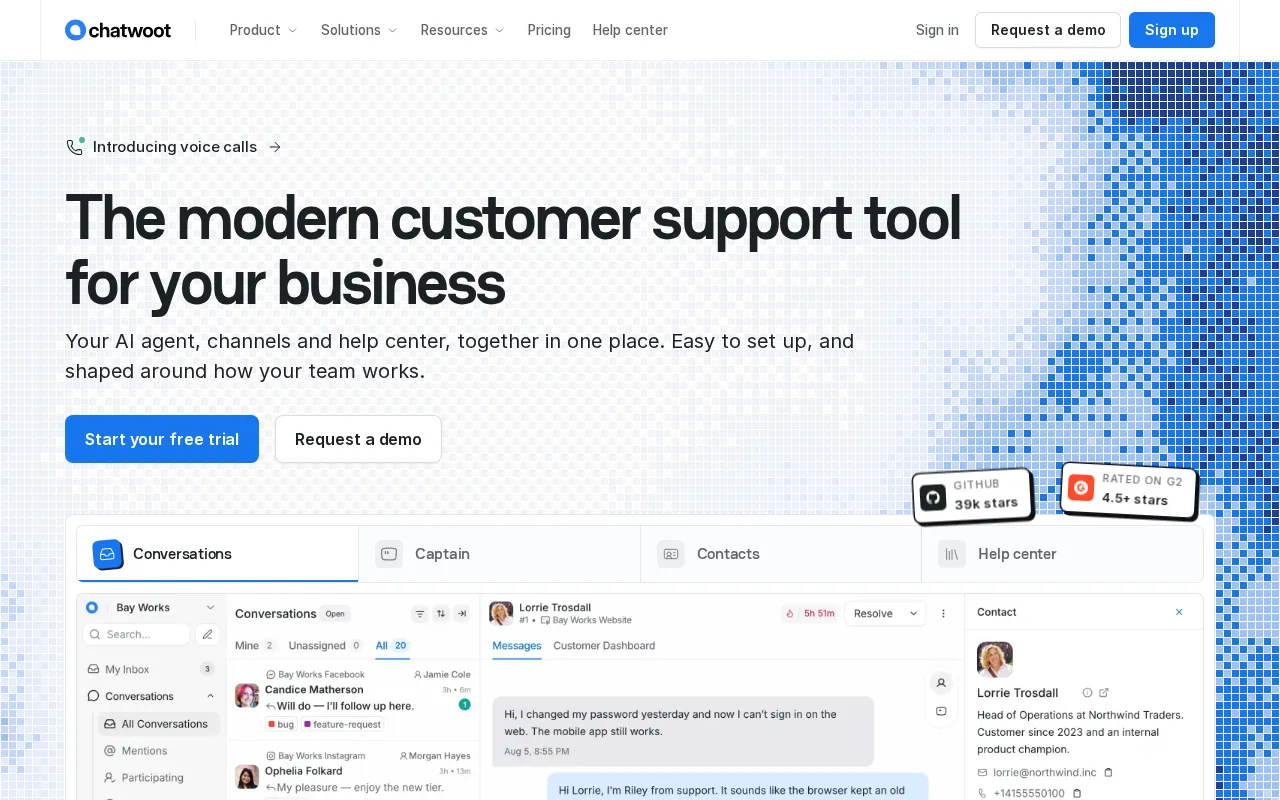
Chatwoot is open-source support software with one inbox for live chat, email, WhatsApp, social and voice, a help center, and Captain, its AI agent. You can use Chatwoot Cloud or host it yourself.
Chatwoot puts TikTok, Instagram, Messenger and WhatsApp in one inbox beside live chat and email, the places many consumers already message from. Each Captain reply uses a credit, with 300 included on Startups at $19 an agent and $20 per 1,000 more, and nothing makes Captain’s custom tools wait for a person before a refund.
- Best for
- Teams that want many channels at a low seat price, or want to run their help desk on their own servers.
- How it bills
- Cloud is per agent a month: Startups $19, Business $39 and Enterprise $99, with 300, 500 or 800 Captain credits for the account. Each Captain reply uses a credit, extra credits are $20 per 1,000, and no annual price is published. Credits never top up by themselves: once they run out, new conversations go straight to your team with no Captain reply.
- Free plan
- Yes: 2 agents, live chat only, 500 conversations a month
- 3 people, 300 AI replies
- $57 a month: 3 Startups agents at $19, with the 300 included Captain credits covering 300 AI replies.
Pros
- Open source: the self-hosted Community Edition is free, and your data stays on your own servers.
- One inbox for live chat, email, WhatsApp, Instagram, Messenger, TikTok and, from Business, voice calls.
- Startups includes every channel but voice, plus a help center, at $19 an agent a month.
- An official CLI and agent skill let coding agents such as Claude Code work in Chatwoot.
Cons
- Startups has no automation rules or teams; those start on Business at $39 an agent.
- Captain uses a credit for every reply, and bought credits expire after 6 months and aren’t refunded.
- Since July 2026 the free Cloud plan has no API or webhook access.
- No official MCP server, and Captain’s custom tools have no built-in approval step for actions like refunds.
Already on Chatwoot? See the best Chatwoot alternatives.
10. Freshdesk
Freshdesk is Freshworks’ help desk: email ticketing with a customer portal and knowledge base, with Freshdesk Omni adding chat, phone and messaging. Its Freddy AI agent answers customers and is billed per session.
When a launch or an outage floods a consumer app’s inbox, Freshdesk’s day passes, from $2, let extra people answer without a full seat. Its Freddy AI agent costs $49 per 100 sessions after the first 500, which come once per account, and fees aren’t refunded when you cancel.
- Best for
- Teams that want a full ticketing help desk with SLAs, routing and a knowledge base, and chat and messaging for less per agent than Zendesk’s Suite Team.
- How it bills
- Per agent on annual billing: Growth is $19, Pro $55 and Enterprise $89 a month, or $29, $79 and $119 on Freshdesk Omni with chat and messaging. Freddy AI agent sessions cost $49 per 100 after 500 free ones, once per account. Voice is $15 to $69 more an agent, and MCP actions $15 per 1,000.
- Free plan
- No, 14-day trial
- 3 people, 300 AI replies
- $204 a month: 3 Growth agents at $19 on annual billing, plus 3 packs of 100 AI sessions at $49, on email only.
Pros
- SLA policies, custom dashboards, skill-based routing and audit logs come on its higher plans, with skill-based routing at $89 an agent where Zendesk asks $115.
- Freshdesk Omni adds chat, phone, WhatsApp, Messenger, Instagram and Line to the same tickets.
- Day passes from $2 let occasional helpers answer without a full seat.
- Its official MCP server can reply, add notes, update tickets and write knowledge base articles.
Cons
- List prices rose early in 2026, from $15 to $19 an agent on Growth, and the free plan is gone.
- Freddy AI agent costs 49 cents a session after the first 500, which never come back.
- Every MCP call counts as an action, and Growth includes only 1,200 a year.
- Fees are non-refundable, and a cancellation only takes effect at the end of your term.
Already on Freshdesk? See the best Freshdesk alternatives.
11. Sierra
Sierra is a conversational AI platform that large companies use to build their own branded AI agent for chat, SMS, WhatsApp, email, voice and ChatGPT. The agent connects to systems such as order management and CRM, and routes what it can’t handle to the company’s contact center with a summary.
Sierra bills by outcome, and a saved cancellation can be one, which suits a subscription app that wants AI to try retention before a subscriber leaves. It’s built for the largest brands: no price on the site, a launch that takes weeks, and handoffs to a contact center you already pay for.
- Best for
- Large brands with a contact center, many systems to connect, and a team ready to build and tune an AI agent with Sierra’s own deployment team over several weeks.
- How it bills
- Sierra lists no prices. It charges by outcome, such as a resolved conversation, a saved cancellation or a sale, against criteria agreed before launch, and says escalated conversations are usually free. Routing or greeter conversations can be billed per conversation instead, in a blended deal.
- Free plan
- No, buying starts with Sierra’s team
- 3 people, 300 AI replies
- Quote only: Sierra prints no rate, so the outcomes in 300 conversations are priced in a deal with its team, and the contact center your people answer handoffs in costs extra.
Pros
- One agent answers on chat, SMS, WhatsApp, email, voice and ChatGPT, and its voice agent speaks over 55 languages.
- Support teams build without code in Sierra’s visual studio or by describing what they want to Ghostwriter, while developers can write journeys as code with its SDK.
- You pay for outcomes, such as a resolved conversation or a saved cancellation, and escalations are usually not charged.
- Its voice agent takes card payments during the call, and Sierra is listed in the Stripe App Marketplace.
Cons
- No price, plan or trial on the site: every path leads to Sierra’s team.
- Launch takes weeks: Sierra promises to deploy “in weeks”, and Airtable went live on chat after four.
- Handoffs go to a contact center your team already runs, so that software is a second bill.
- It is built for the largest companies, with 40% of the Fortune 50 as partners, and expects a team to keep improving the agent.
Already on Sierra? See the best Sierra alternatives.
12. Decagon
Decagon is an AI agent platform for large companies that answers customers on chat, email and voice. It works through the help desk or CRM you already run, such as Zendesk, Intercom or Salesforce, and escalates what it can’t solve to your team there.
For a subscription app billed through Stripe Billing, Decagon connects to it for subscriptions, and Duolingo went live a month after its first conversations with Decagon. Prices come only after a demo, and on per-conversation pricing, which Decagon says most customers choose, the conversations it escalates are billed too.
- Best for
- Enterprises with a high-volume queue across chat, email and phone, and a support operations team to build and test the AI with Decagon’s engineers.
- How it bills
- Decagon publishes no prices. Its own pricing post describes two options: a fixed rate for every incoming conversation, or a higher one for each fully resolved conversation, with lower rates for bigger volumes or commitments. Buying starts with “Get a demo”, and the help desk it answers in bills separately.
- Free plan
- No, buying starts with a demo
- 3 people, 300 AI replies
- Quote only: No published rate: 300 conversations are priced per conversation or per resolution through Decagon’s sales team, and your help desk’s seats come on top.
Pros
- One AI answers on web chat, SMS, WhatsApp, email and phone, and its voice agent speaks 70+ languages.
- Your support team writes the AI’s workflows in plain language, as procedures Decagon calls AOPs, then tests and A/B tests changes before rolling them out.
- Pre-built connections reach Zendesk, Intercom, Salesforce, Gorgias, Kustomer and Gladly, plus Shopify and Stripe Billing for orders and subscriptions.
- Decagon’s own team works alongside yours during rollout, as its case studies with Rippling and 1-800-Flowers.com describe.
Cons
- No published price, no free plan and no trial: every path to buying starts with “Get a demo”.
- It answers inside your help desk, so Decagon is a second bill beside that help desk’s seats.
- Going live takes weeks: Duolingo was live a month after its first conversations with Decagon, which Decagon calls a quick implementation.
- On per-conversation pricing, which Decagon says most customers choose, conversations the AI escalates to your team are billed too.
Already on Decagon? See the best Decagon alternatives.
13. Ada
Ada is an AI agent for enterprise customer service that answers on chat, email, voice and social messaging. It keeps its own record of every conversation, and hands customers to people in a help desk or contact center such as Zendesk, Salesforce, Gorgias or Help Scout.
For a large consumer app with engineers to spare, Ada answers on web and app chat, email, phone, SMS and messaging apps, and can call MCP servers you run to look up or change a subscription. Your engineers build those tools, there is no published price, and handoffs land in a help desk you pay for separately.
- Best for
- Large companies with a contact center and an engineering team, that want an AI answering at volume on chat, email and phone and can buy through a sales process.
- How it bills
- Ada publishes no prices or plans. Its pricing page books a 30-minute call for a custom demo and an ROI model based on your volume, and its docs say some features, such as the Data Export API, may not be in your package.
- Free plan
- No, demo through sales
- 3 people, 300 AI replies
- Quote only: Ada publishes no price, so 300 conversations are quoted by sales, and the help desk your team takes handoffs in bills its own seats.
Pros
- One AI agent answers on web and app chat, email, phone, WhatsApp, Messenger, Instagram and SMS.
- Ready-made handoffs reach Zendesk, Salesforce, Gorgias, Help Scout and other help desks and contact centers, passing the context along.
- It can call the MCP servers your company already runs to look up or change an order, a subscription or an account during a conversation.
- Its own MCP server lets Claude or ChatGPT read transcripts and metrics, and stage changes to knowledge articles and Playbooks for review.
Cons
- No published price, no free plan and no trial: buying starts with a demo call.
- Ada hands conversations to people on “your preferred agent platform”, so your team still pays for a help desk or contact center to answer them.
- Transcripts with personal data are deleted after two years, and the Data Export API only reaches the past year and may not be in your package.
- Looking up or refunding an order is a tool your team builds or connects: an API tool, a code tool or an MCP server you run.
Already on Ada? See the best Ada alternatives.
14. LiveAgent
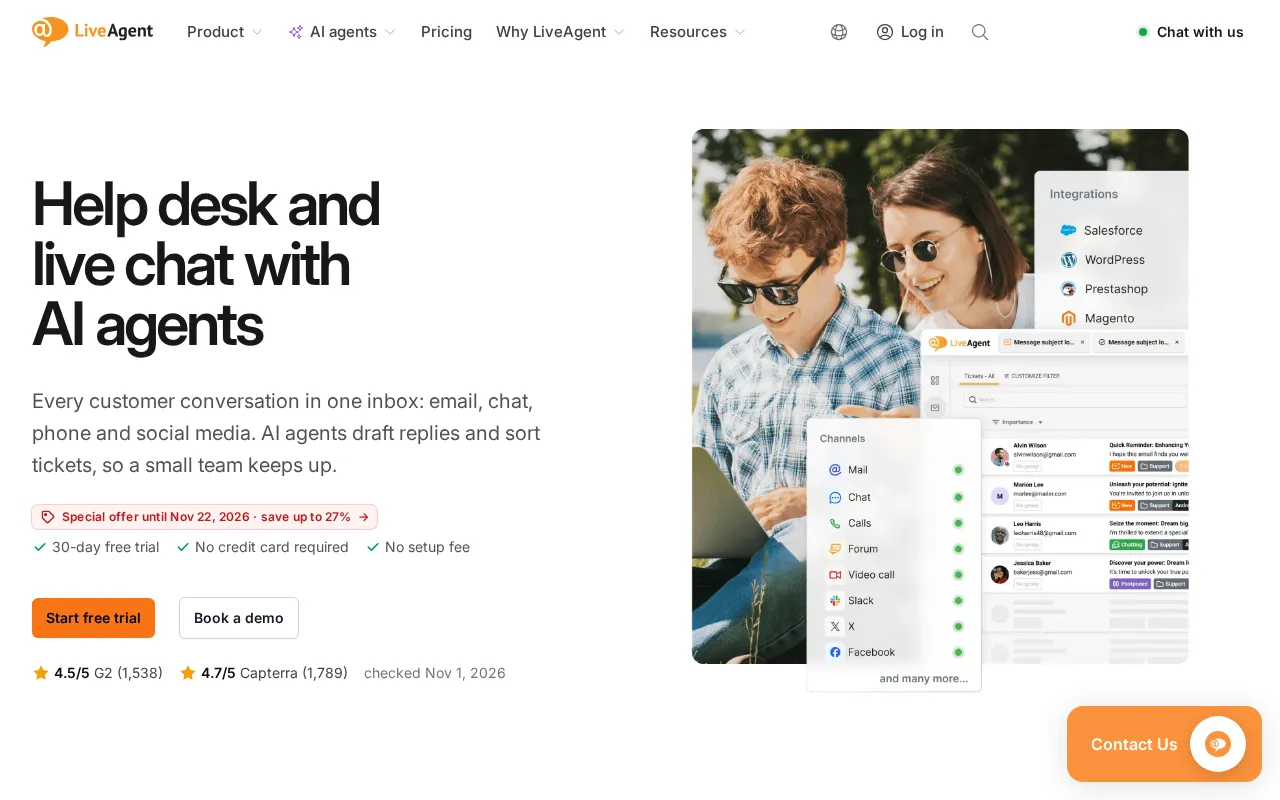
LiveAgent is help desk and call center software from Quality Unit, sold since 2004. Email, live chat, phone, social media and WhatsApp share one inbox, with a knowledge base and AI agents that run on your own AI provider.
When AI answers most of a consumer queue, LiveAgent charges nothing for the AI itself: answers run on your own OpenAI, Anthropic, Google Gemini or FlowHunt account, about $0.11 for a typical chat, by LiveAgent’s pricing page. Stripe connects only through Zapier, and Starter stops at 5 agents with no WhatsApp or social channels.
- Best for
- Small and growing teams that take phone calls and social messages beside email and chat, and want AI without a per-resolution fee.
- How it bills
- Per agent on annual billing: Starter is $15 for up to 5 agents, Team $29 for up to 15 and Business $49 for any size ($19, $35 and $59 monthly). Enterprise is $3,199 a month for 80 agents on annual billing ($3,999 monthly). LiveAgent adds no AI fee: you pay OpenAI, Anthropic, Google or FlowHunt directly.
- Free plan
- No, 30-day trial without a card
- 3 people, 300 AI replies
- $78 a month: 3 Starter agents at $15 on annual billing, plus about $33 at your own AI provider for 300 AI chats at $0.11, the typical chat on LiveAgent’s pricing page.
Pros
- From Team, calls, Facebook, Instagram, X, Viber, WhatsApp and Telegram arrive in the same inbox as email and chat.
- LiveAgent adds nothing for AI: every AI feature runs on your own OpenAI, Anthropic, Google Gemini or FlowHunt account, at its prices.
- AI agents can answer new chats, emails, WhatsApp and Instagram messages first, and a voice AI agent can answer calls.
- Its official MCP server has 33 tools, so Claude can search, assign, resolve and reopen tickets and write knowledge base articles.
Cons
- Starter stops at 5 agents and leaves out calls, social channels, WhatsApp and reports, so a sixth agent moves everyone to Team.
- AI needs an account with an AI provider, billed separately and by the model you choose, so the full cost arrives in two bills.
- The MCP server needs Business, and it replies to customers only on WhatsApp.
- Stripe connects only through Zapier, and LiveAgent gives no refunds or credits for downgrades or unused months.
Already on LiveAgent? See the best LiveAgent alternatives.
15. eesel AI
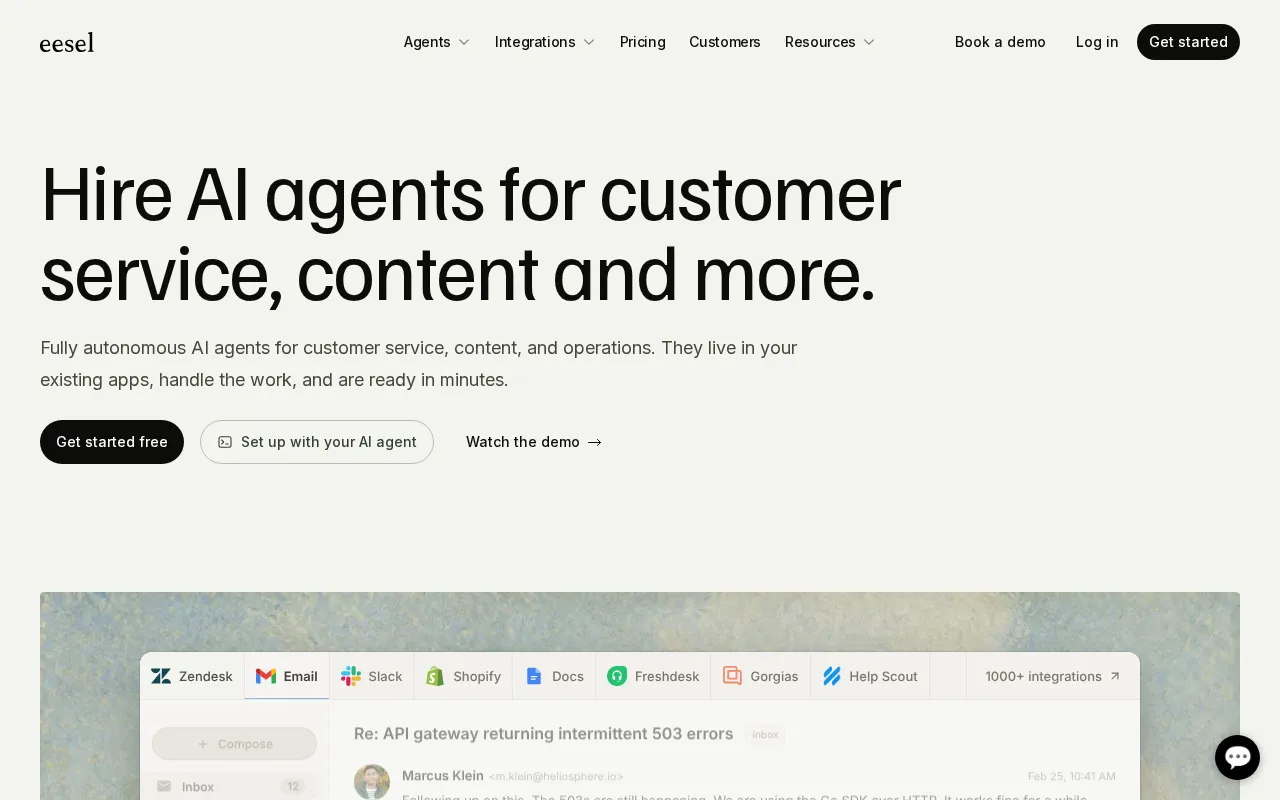
eesel AI is an AI agent that works inside the help desk you already use, such as Zendesk, Freshdesk, Intercom or Gorgias, and in your website chat, Slack and email. It drafts or sends replies from your help center, past tickets and documents.
For a consumer app already answering in Zendesk, Freshdesk or Intercom, eesel AI adds an AI there and lets you hold refunds for a person’s approval while routine replies go out on their own. A ticket is 1 credit however long the back-and-forth runs, and the smallest plan is $299 a month for 500 credits.
- Best for
- Teams keeping Zendesk, Freshdesk, Intercom or another help desk that want an AI to draft or send replies there, with each action set to run, ask first or stay off.
- How it bills
- Teammate plans are monthly batches of credits: 500 for $299, 1,000 for $499 and 3,000 for $1,149, up to 5,000 for $1,749. A ticket or a chat is 1 credit however long it runs, and extra credits are $0.80 each up to a monthly cap you set, which starts at $200. Unused credits don’t roll over. Enterprise adds $1,000 a month, and priority support starts at $299 a month.
- Free plan
- No, 7-day trial with 100 credits
- 3 people, 300 AI replies
- $299 or more a month: 300 tickets and chats fit the 500-credit plan at $299. The help desk eesel AI works in bills its seats on top.
Pros
- It works inside the help desk you already use, so your tickets, macros and workflows stay where they are.
- Each action, from a reply to a refund, can run on its own, wait for a person to approve it, or stay off.
- A ticket is 1 credit however many replies go back and forth, with no seat fees and no limit on agents.
- One agent covers Zendesk, Freshdesk, Intercom, Gorgias, HubSpot, Help Scout, Front and Salesforce, plus a website chat bubble, Slack and WhatsApp.
Cons
- It isn’t a help desk: it works inside the one you keep, so that help desk stays on your bill.
- A ticket that wakes the agent uses 1 credit even when the agent decides not to act.
- The smallest plan is $299 a month for 500 credits, and unused credits reset each billing month.
- Default support is eesel AI first, then a human within a few days. Same-day replies need priority support.
Already on eesel AI? See the best eesel AI alternatives.
16. BoldDesk
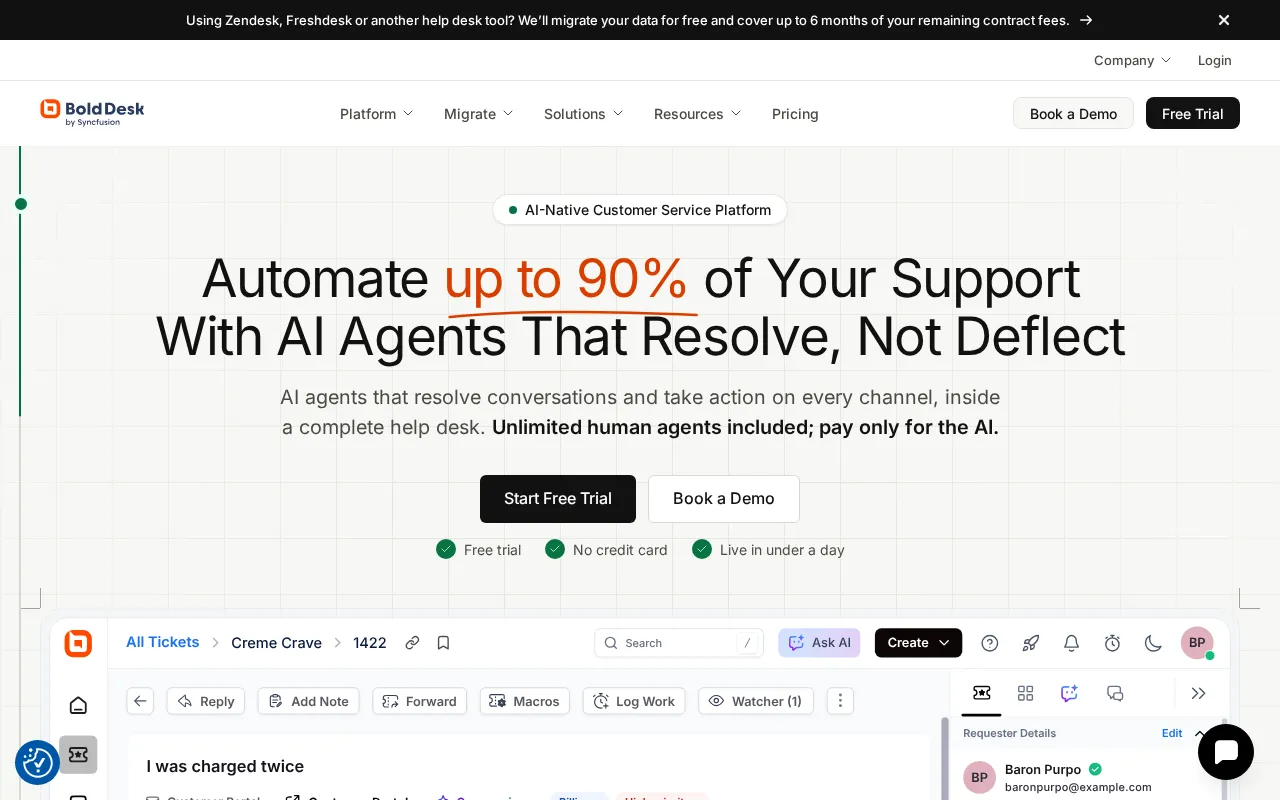
BoldDesk is a help desk and AI customer service platform from Syncfusion. Its AI agents answer on email, chat, WhatsApp, social media and SMS, and its AI plans include unlimited human agents.
BoldDesk’s AI plans include unlimited “human agents”, so extra teammates for a launch or a renewal rush don’t raise the bill, though chat needs Momentum AI at $499 a month, billed annually. BoldDesk says it can’t predict or cap what one AI response costs, and plan credits lapse at the end of each month.
- Best for
- Large support teams, often running several brands, that want every agent in the help desk and to pay only for the work AI does.
- How it bills
- Enterprise is $35 an agent a month on annual billing ($40 monthly), with every help desk feature, live chat included. Its pricing page sells AI for it as an add-on, credits at $40 per 1,000 shared across every agent, while BoldDesk’s plan articles say Enterprise has no AI. AI plans instead include unlimited human agents and a monthly allowance of credits: Scale AI is $99 a month with 500, Momentum AI $499 with 1,000 and Enterprise AI $999 with 2,500, on annual billing ($116, $587 and $1,175 monthly). Bought credits never expire, while plan credits lapse at the end of each month.
- Free plan
- No, 15-day trial with no card
- 3 people, 300 AI replies
- $185 or more a month: 3 Enterprise agents at $35 on annual billing, plus 2 AI add-on credit packs of 1,000 at $40 for 300 AI answers at 5 credits each, the default in BoldDesk’s cost calculator, as its per-agent pricing page sells it. BoldDesk’s plan articles say Enterprise has no AI, which would leave Momentum AI at $499 as the first AI plan with chat.
Pros
- The AI plans include unlimited human agents, so on them adding a teammate never raises the bill.
- An official hosted MCP server lets Claude, ChatGPT or Copilot read tickets, reply, add notes, change status and assignee, and search or create knowledge base articles.
- Shopify order history and Stripe subscriptions show beside the ticket, and agents can issue Stripe refunds and cancellations from BoldDesk.
- Its own AI agent can call your APIs and MCP servers, with each action set to run on its own or wait for a person’s approval.
Cons
- On Enterprise every agent is $35 a month and AI credits come on top, and BoldDesk’s pricing page and plan articles disagree on whether that plan can have AI at all. The unlimited-agent plans with chat start at Momentum AI, $499 a month on annual billing, since Scale AI has no chat widget.
- Credits per answer vary with length and complexity, and BoldDesk says the cost of a response can’t be predicted or capped.
- Plan credits expire unused at the end of each cycle, and AI stops answering when the balance reaches zero.
- No free plan, and BoldDesk Voice is still launching soon, so phone calls come in through integrations such as Aircall.
Already on BoldDesk? See the best BoldDesk alternatives.
17. Tidio
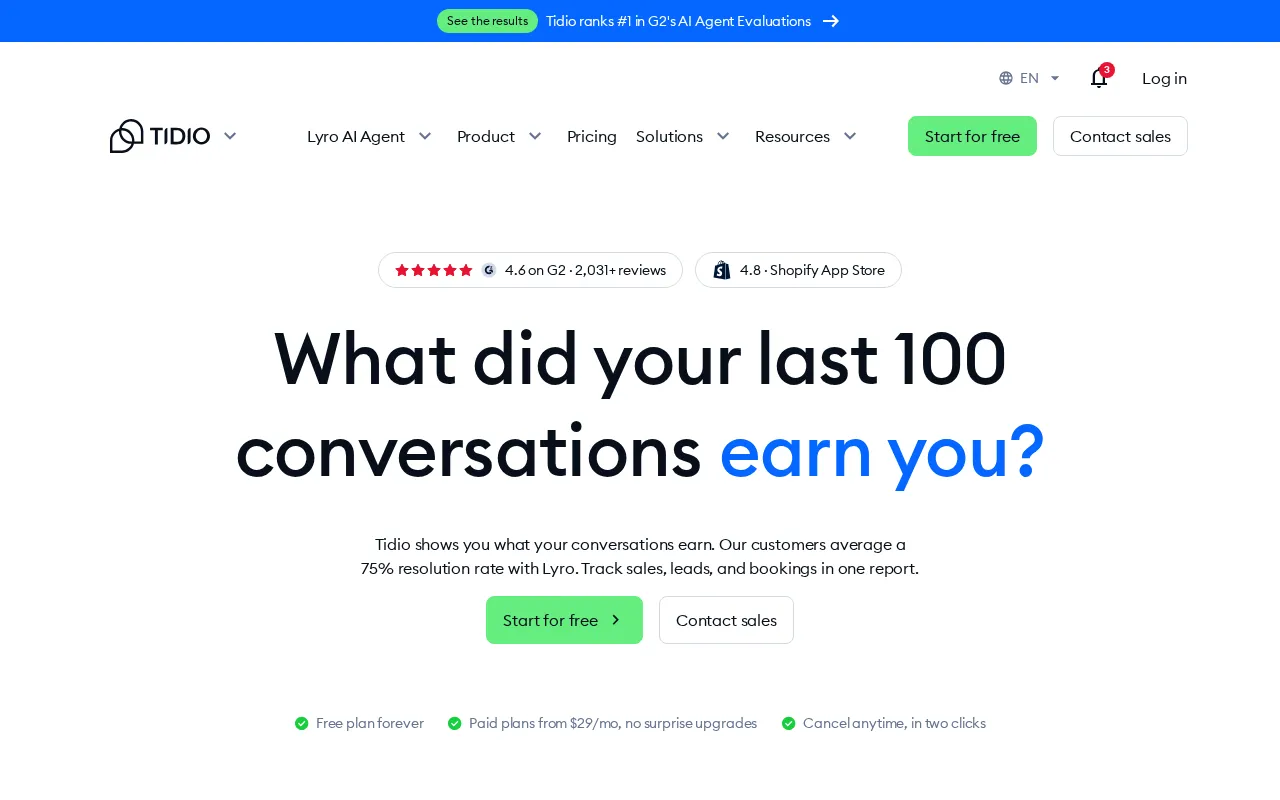
Tidio is a live chat and help desk tool built for online stores, especially Shopify, with Lyro, an AI agent sold as an add-on, and a help center since 2026.
Tidio goes deepest on Shopify stores, so a consumer app mostly wants its mobile SDK, which comes only on Premium, through a quote. On Free, Starter and Growth, plans are priced by the conversations your team answers, with 10 seats, and Lyro, its AI, is an add-on from $32.50 a month for 50 conversations on annual billing.
- Best for
- Shopify and WooCommerce stores that want chat, WhatsApp and Instagram in one inbox and an AI that recommends products.
- How it bills
- Plans are priced by the conversations your team answers, with 10 seats: Starter is $24.17 a month on annual billing ($29 monthly) for 100, and Growth runs from $49.17 for 250 ($59 monthly) to $349 monthly for 2,000. Lyro is an add-on from $32.50 a month for 50 conversations to $583.33 for 1,000 on annual billing ($39 for 50, $210 for 300 and $700 for 1,000 monthly), and Plus starts at $300 a month plus usage.
- Free plan
- Yes: 10 seats, 50 conversations a month
- 3 people, 300 AI replies
- $199 or more a month: Starter at $24.17 on annual billing plus 300 Lyro conversations at $175. Starter covers 100 conversations your team answers, and more needs Growth.
Pros
- Up to 10 seats on Free, Starter and Growth, so the bill doesn’t grow as you add teammates.
- WhatsApp, Instagram, Messenger and email on every plan, including Free.
- Lyro recommends products and adds them to the cart on Shopify and WooCommerce.
- Lyro’s actions can check orders, cancel or change them and refund, and Lyro can call your own MCP servers.
Cons
- Lyro is a separate add-on billed per conversation, about $0.58 to $0.78 each by tier and billing, and over 1,000 a month is priced by sales.
- The API and Stripe integration need Plus, from $300 a month.
- Its official MCP server only reads analytics data, loaded once a day, so your own AI can’t reply or close.
- No refunds for time left after you cancel.
Already on Tidio? See the best Tidio alternatives.
18. Zoho Desk
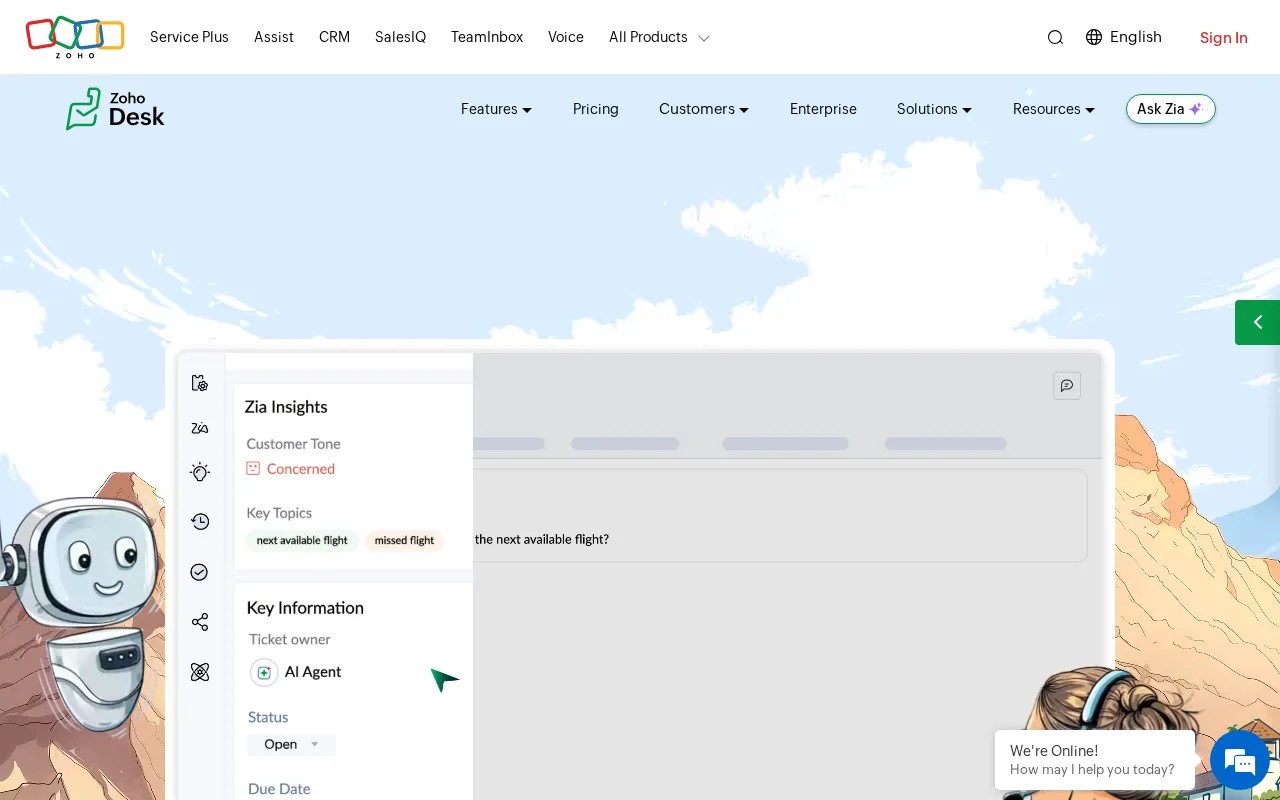
Zoho Desk is the help desk in Zoho’s suite of business apps, with tickets from email, social media, chat, WhatsApp and phone, a multilingual help center, and Zia, Zoho’s AI.
For a consumer app with subscribers abroad, Zoho Desk’s Professional publishes a help center in over 40 languages, and its AI agents include up to 30 million free tokens a month. Seats are $14 a user on Standard billed annually, but Zia’s full AI needs Professional.
- Best for
- Budget-minded teams that want a full ticketing suite with workflows and SLAs, especially if they already use other Zoho apps.
- How it bills
- Per user: Express is $7, Standard $14, Professional $23 and Enterprise $40 a month on annual billing ($9, $20, $35 and $50 monthly), and light agents are $6 each. Express allows up to 5 users; Standard and above have no user limit. AI agents include up to 30 million free tokens a month. Other generative features run on a key you bring from an AI provider, and Professional and Enterprise add Zia’s own.
- Free plan
- Yes: 3 users, email only
- 3 people, 300 AI replies
- $42 a month: 3 Standard users at $14 on annual billing, the first plan with live chat and Answer Bot, which answers customers from your help center. Zoho publishes no per-answer fee.
Pros
- Low seat prices: Express is $7 a user and Standard $14 on annual billing, with a free plan for 3 users.
- Standard adds live chat, WhatsApp, Telegram and other messaging apps, and Professional adds phone support.
- Workflows, SLAs and several departments, with a help center you can publish in over 40 languages on Professional.
- Zoho’s official MCP server is free and can read tickets, send replies and add comments.
Cons
- Express stops at 5 users, so a sixth teammate moves everyone to Standard at $14.
- Zia’s full AI needs Professional, and the agent that answers email tickets is open only to selected accounts.
- The MCP server has no tools for help center articles or saved replies, and every call uses daily API credits.
- Express has no live chat, and the free plan covers email only.
Already on Zoho Desk? See the best Zoho Desk alternatives.
19. tawk.to
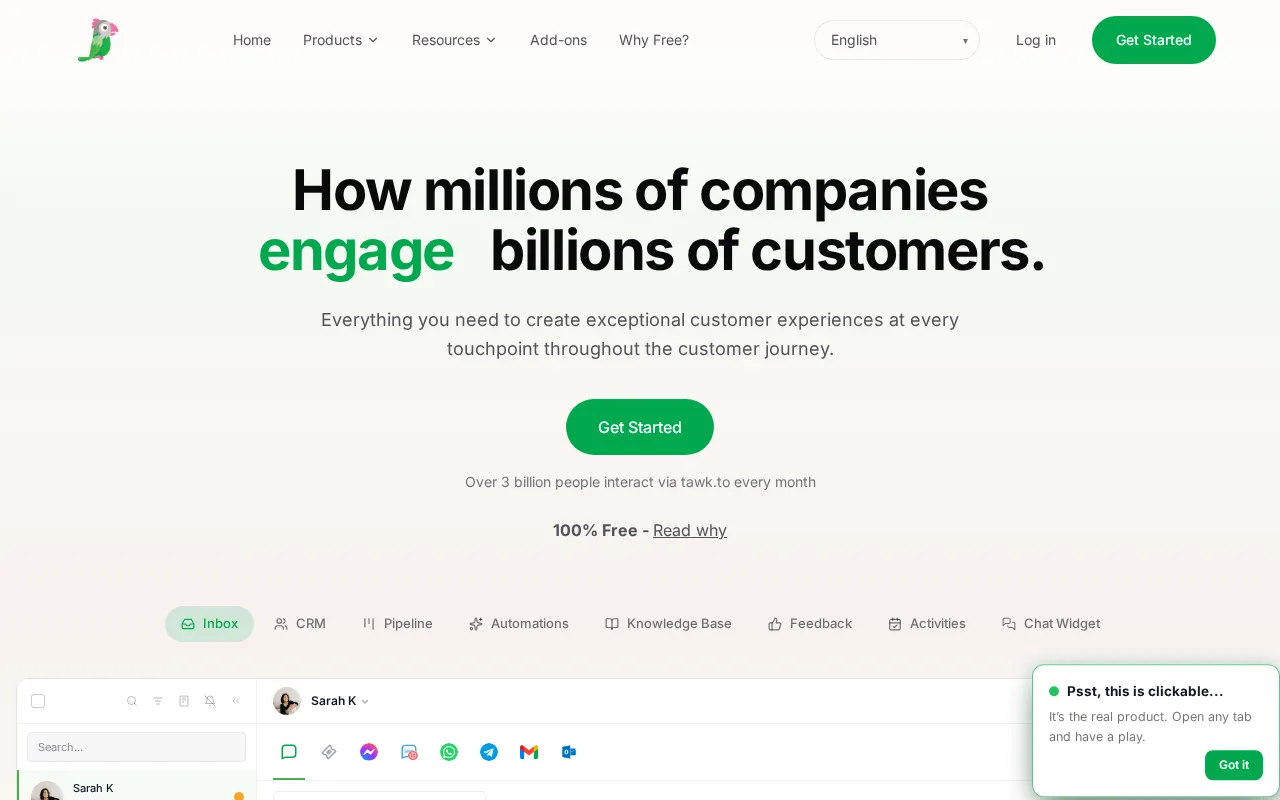
tawk.to is free live chat and ticketing software for websites, with a hosted knowledge base. It makes its money from paid add-ons, such as AI Assist, white label and hired chat agents, billed per website.
tawk.to costs nothing for any number of agents, the pick for a consumer app with no support budget yet, and its AI answers on chat, WhatsApp, SMS and Messenger. AI Assist gives 100 free credits a month, about 33 replies, and the tawk.to badge stays unless you pay $29 a month per property, or $39 billed monthly.
- Best for
- Small businesses that want website chat for any number of agents at no cost, and don’t mind the tawk.to badge.
- How it bills
- Chat, ticketing and the knowledge base are free for any number of agents. AI Assist is free for 100 credits a month, then $29, $99 or $399 a month ($290, $990 or $3,990 a year) for 1,000, 5,000 or 20,000 credits, and a reply on the default Auto model uses 3.
- Free plan
- Yes: unlimited agents and chats, about 33 AI replies a month
- 3 people, 300 AI replies
- $24 a month: AI Assist Growth at $290 a year, whose 1,000 monthly credits cover 300 replies at 3 credits each on the Auto model. Seats are free.
Pros
- Free for any number of agents, chats and websites, with ticketing and a hosted knowledge base.
- WhatsApp, Messenger, SMS through Twilio and email share one inbox, and the AI answers on chat, WhatsApp, SMS and Messenger.
- Its Shopify app adds a tab where agents check orders, refund and cancel during a chat.
- Hired chat agents start at $1 an hour if you want someone else to answer.
Cons
- AI Assist charges per reply, and once credits run out it stops joining new conversations.
- The “Powered by tawk.to” badge stays unless you pay for white label, $39 a month or $348 a year for each website.
- No official MCP server, and REST API access must be requested and approved first.
- Add-ons are billed per website, so each extra site pays again.
Already on tawk.to? See the best tawk.to alternatives.