Start free

11 best Capacity alternatives (2026)

By , founder of Rinhelp · Facts checked

The short answer

The best Capacity alternatives are Rinhelp, for a small team that wants Rin answering email and live chat in its own inbox at a price on the page, and Ada, Kore.ai or Sierra for a contact center that wants another enterprise AI agent on the phone and in chat. Capacity is a platform for mid-market and enterprise contact centers, sold as a yearly platform fee plus usage that only its sales team prices, while Rinhelp is $49 a month for the whole workspace with 5,000 AI replies and free for 3 teammates. Decagon or Fin answer inside the help desk you keep, Zendesk AI and Salesforce Service Cloud suit teams already on those, and Kustomer or Gladly fit a consumer brand with heavy phone traffic.

See Rinhelp on your own site. Enter your website and Rin builds your help desk from it: a chat widget, a help center and an inbox.

Free. No sign-up to look. Ready in a minute or two.

Is your help center somewhere else?

Rin will read . If your help articles or docs live at another address, like help. or a Notion page, Rin can read those too.

Where is your help center?

Rin reads it along with and turns it into your help center.

Capacity alternatives at a glance

ToolBest forHow it billsFree plan3 people, 300 AI replies
RinhelpSmall teams that found Capacity on a list of AI support tools and want AI on email and live chat without a yearly platform fee, a proposal or a contact center to run it in.One price per workspaceYes: 3 teammates, 50 AI replies to try Rin$49
AdaLarge companies with a contact center and an engineering team, that want an AI answering at volume on chat, email and phone and can buy through a sales process.Quoted by salesNo, demo through salesQuote only
Kore.aiLarge companies, often in banking, healthcare, retail or telecom, that want one platform for voice and digital AI agents across customer service and internal help, with builders to design and test them.Quoted by salesA free plan is listed, though the quick start opens sign-up only to approved domainsQuote only
SierraLarge brands with a contact center, many systems to connect, and a team ready to build and tune an AI agent with Sierra’s own deployment team over several weeks.Quoted by sales, per outcomeNo, buying starts with Sierra’s teamQuote only
DecagonEnterprises with a high-volume queue across chat, email and phone, and a support operations team to build and test the AI with Decagon’s engineers.Quoted by sales, per conversation or resolutionNo, buying starts with a demoQuote only
FinTeams with a large queue on Zendesk, Salesforce, HubSpot or Freshdesk that want a strong AI answering customers without changing help desks.Per outcome, $49 a month minimumNo, 14-day trial$297 or more
Zendesk AITeams settled on Zendesk that want an AI answering inside it, beside the tickets, triggers and reports they already run.Per automated resolution, on top of Zendesk seatsNo, 14-day trial$428 or more
Salesforce Service CloudLarge service teams already on Salesforce that need contact center seats, voice, routing and admins who customize the platform.Per user on annual billing, plus each AI resolutionNo, free trial$1,185
KustomerMid-size and large consumer brands that want every order, conversation and channel on one customer timeline, and buy through a sales team.Quoted by sales, plus each AI conversationNo, and no self-serve trial$225 or more
GladlyLarge retail brands that want voice, messaging and an AI that sells and serves in one customer timeline.Per team member, plus each AI resolutionYes on Shopify: 1 seat, 100 AI interactions$810 or more
IntercomSoftware and app companies that want chat, email, phone, WhatsApp and SMS in one inbox, with Fin answering across them.Per seat, plus each Fin outcomeNo, 14-day trial$354
Capacity, for comparisonContact centers in retail, healthcare, banking or insurance that want AI on the phone and on digital channels, plus coaching and QA for their people, from one vendor.Platform fee plus usage, quoted by salesNo free plan; a 30-day trial of its chat bot is requested through a formQuote only

1. Rinhelp

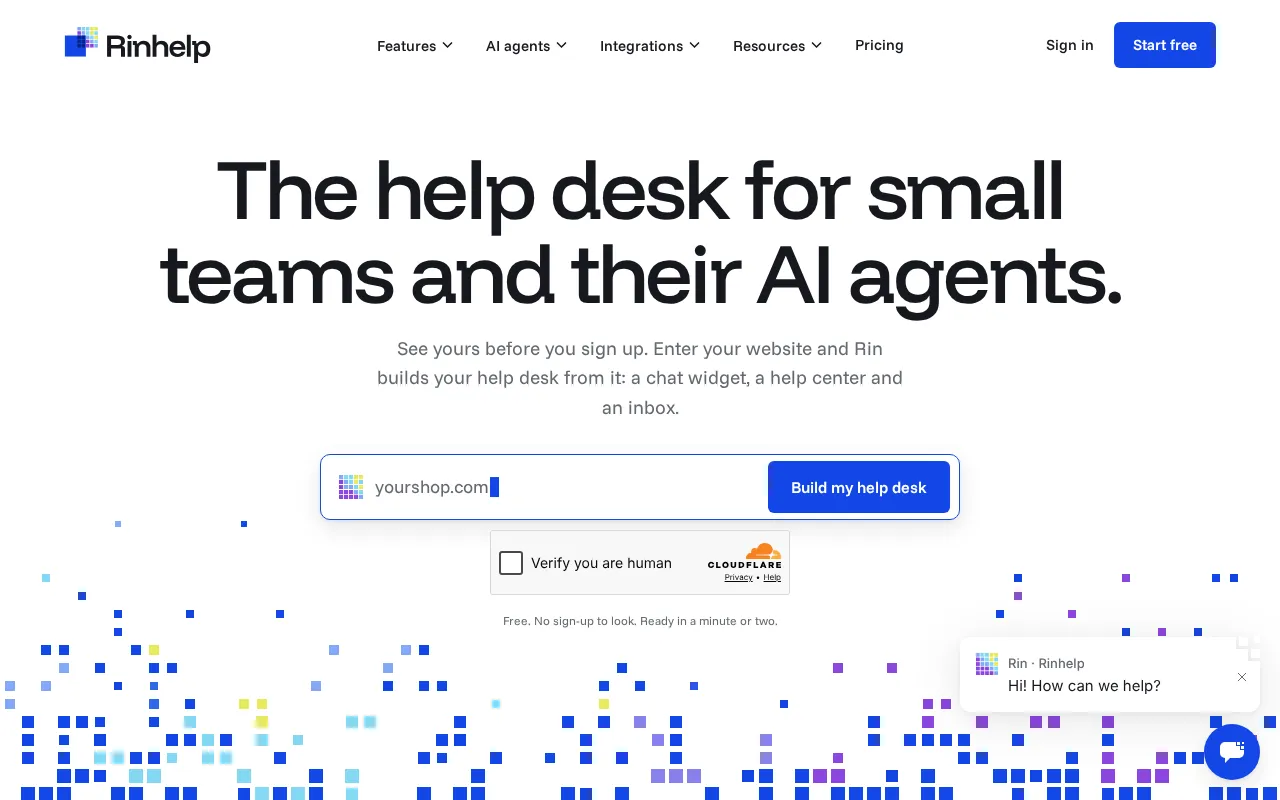
Rinhelp homepage, November 2026

Capacity sells a contact center an AI layer, agent coaching, QA and outbound campaigns, and the price arrives in a proposal. Rinhelp is smaller and ready to use: one inbox for email and live chat, a help center, and Rin, our built-in AI, which answers each new conversation from your docs and hands the rest to your teammates. It is $49 a month for the whole workspace with 5,000 AI replies, and you can sign up today.

Best for
Small teams that found Capacity on a list of AI support tools and want AI on email and live chat without a yearly platform fee, a proposal or a contact center to run it in.
How it bills
Free for up to 3 teammates. Pro is $49 a month for the whole workspace, with 5,000 AI replies from Rin. No per-seat or per-resolution fees.
Free plan
Yes: 3 teammates, 50 AI replies to try Rin
3 people, 300 AI replies
$49 a month: Pro for the whole workspace, using 300 of its 5,000 AI replies; Free covers your team if you don’t need AI replies.

Pros

  • A price you can read before any call: $49 a month with 5,000 AI replies, against a platform fee and per-response rates Capacity keeps for its proposal.
  • The inbox, live chat, help center and AI come in one plan, where Capacity saves its help desk and live chat for the Pro tier.
  • Setup is yours to do in an afternoon: forward your support address, add the chat widget and point Rin at your docs.
  • Claude, ChatGPT or your own AI agent can reply, assign and close through MCP, and a refund it asks for waits for a teammate’s approval.

Cons

  • Email and live chat only: there is no phone, WhatsApp, SMS or social inbox.
  • Shopify and Stripe are the only integrations.
  • No reports, SLA rules or routing rules: Rin hands a conversation to the teammate with the fewest open ones.
  • The free plan has no Rin beyond 50 AI replies to try it.
Start free

2. Ada

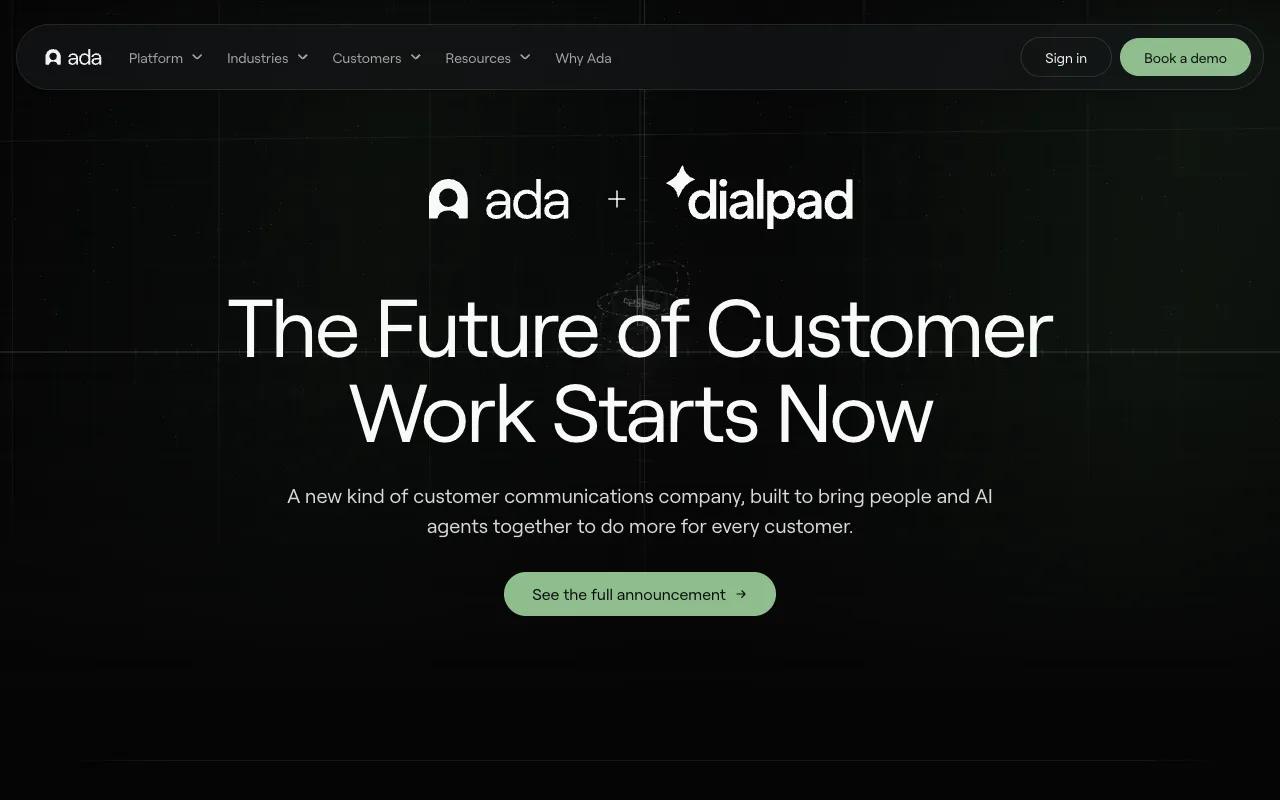
Ada homepage, November 2026

Ada is an AI agent for enterprise customer service that answers on chat, email, voice and social messaging. It keeps its own record of every conversation, and hands customers to people in a help desk or contact center such as Zendesk, Salesforce, Gorgias or Help Scout.

Best for
Large companies with a contact center and an engineering team, that want an AI answering at volume on chat, email and phone and can buy through a sales process.
How it bills
Ada publishes no prices or plans. Its pricing page books a 30-minute call for a custom demo and an ROI model based on your volume, and its docs say some features, such as the Data Export API, may not be in your package.
Free plan
No, demo through sales
3 people, 300 AI replies
Quote only: Ada publishes no price, so 300 conversations are quoted by sales, and the help desk your team takes handoffs in bills its own seats.

Pros

  • One AI agent answers on web and app chat, email, phone, WhatsApp, Messenger, Instagram and SMS.
  • Ready-made handoffs reach Zendesk, Salesforce, Gorgias, Help Scout and other help desks and contact centers, passing the context along.
  • It can call the MCP servers your company already runs to look up or change an order, a subscription or an account during a conversation.
  • Its own MCP server lets Claude or ChatGPT read transcripts and metrics, and stage changes to knowledge articles and Playbooks for review.

Cons

  • No published price, no free plan and no trial: buying starts with a demo call.
  • Ada hands conversations to people on “your preferred agent platform”, so your team still pays for a help desk or contact center to answer them.
  • Transcripts with personal data are deleted after two years, and the Data Export API only reaches the past year and may not be in your package.
  • Looking up or refunding an order is a tool your team builds or connects: an API tool, a code tool or an MCP server you run.

Already on Ada? See the best Ada alternatives.

3. Kore.ai

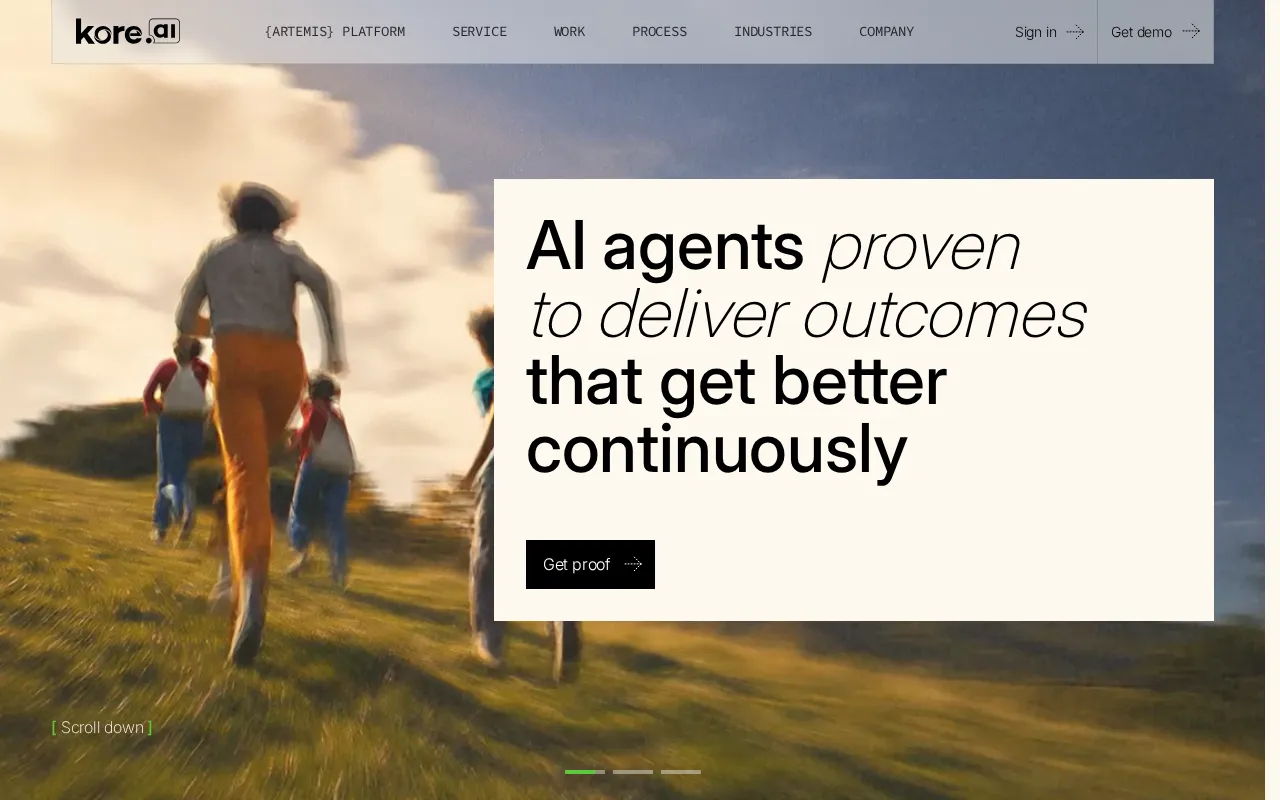
Kore.ai homepage, November 2026

Kore.ai is an enterprise platform for building AI agents, called {Artemis}, that serve customers on voice, chat, email and messaging apps, and employees in HR and IT. It keeps its own record of every session, and hands customers to people in a contact center such as Salesforce, ServiceNow, Genesys, Five9 or Amazon Connect.

Best for
Large companies, often in banking, healthcare, retail or telecom, that want one platform for voice and digital AI agents across customer service and internal help, with builders to design and test them.
How it bills
Kore.ai publishes no prices: its pricing page is gone, and its site offers a demo and a request for a quote. Its docs list Free, Team, Business and Enterprise plans, billed per seat, per seat plus tokens and messages, or by annual contract, and new sessions pause when a workspace passes its quota.
Free plan
A free plan is listed, though the quick start opens sign-up only to approved domains
3 people, 300 AI replies
Quote only: Kore.ai prints no rate, so 300 conversations are priced by its sales team, and the contact center your people answer handoffs in is a separate bill.

Pros

  • One agent definition answers on web and mobile chat, email, voice, WhatsApp, Messenger, Instagram, SMS, Slack and Teams.
  • Escalations reach people in Salesforce, ServiceNow, Genesys Cloud, Five9 or Amazon Connect, with the context you choose passed along.
  • Ready-made actions cover Shopify, Stripe, Zendesk and dozens of other systems, and its knowledge connectors index Zendesk, Intercom, Help Scout and Freshdesk content.
  • Its MCP server lets Claude Code or another assistant build, test and debug agents, and page through past sessions and traces.

Cons

  • No published price, and sign-up is limited to approved domains: access starts with Kore.ai’s team.
  • Setup has you register an LLM provider’s API key, such as OpenAI or Anthropic, before you build anything.
  • Kore.ai hands people conversations in a separate contact center, so your team still pays for one to answer them.
  • Agents are defined in ABL, a typed language of Kore.ai’s own, and its Forward Deployed Engineers take customers from proof to production in weeks.

Already on Kore.ai? See the best Kore.ai alternatives.

4. Sierra

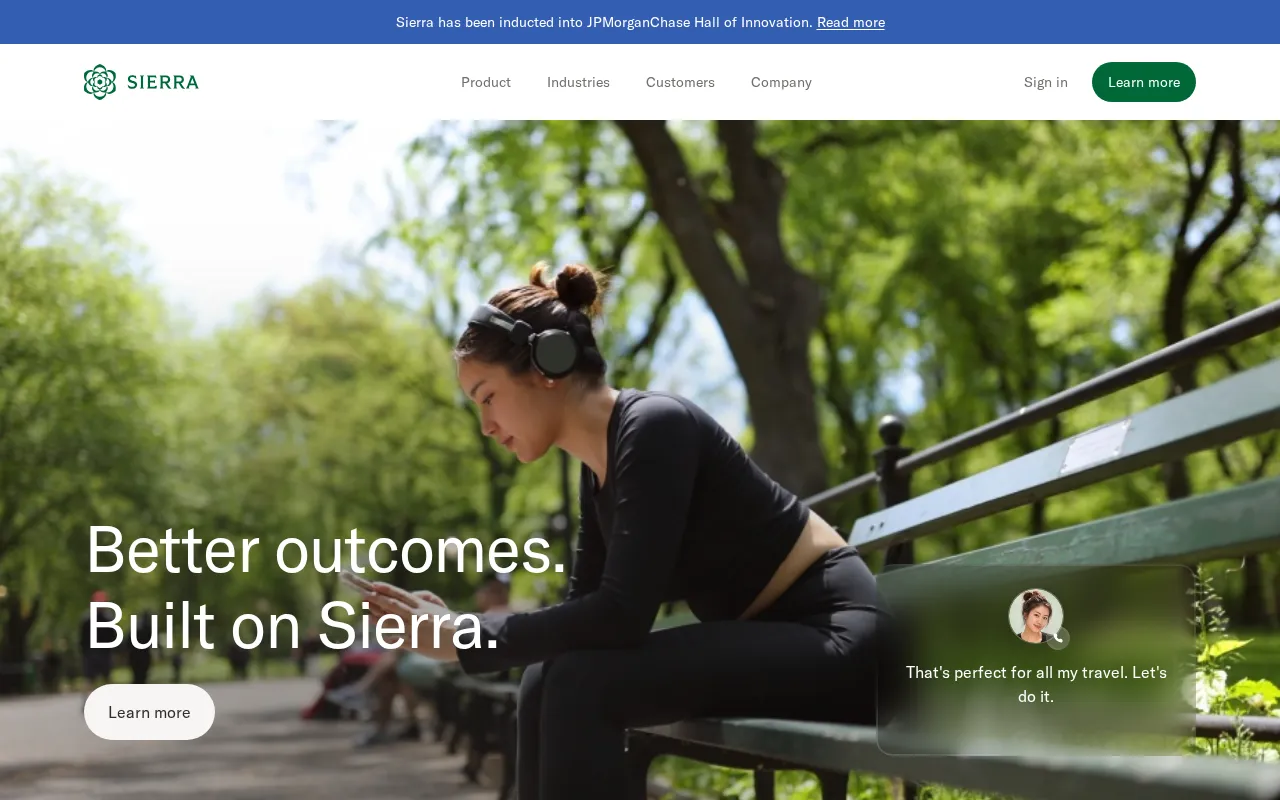
Sierra homepage, November 2026

Sierra is a conversational AI platform that large companies use to build their own branded AI agent for chat, SMS, WhatsApp, email, voice and ChatGPT. The agent connects to systems such as order management and CRM, and routes what it can’t handle to the company’s contact center with a summary.

Best for
Large brands with a contact center, many systems to connect, and a team ready to build and tune an AI agent with Sierra’s own deployment team over several weeks.
How it bills
Sierra lists no prices. It charges by outcome, such as a resolved conversation, a saved cancellation or a sale, against criteria agreed before launch, and says escalated conversations are usually free. Routing or greeter conversations can be billed per conversation instead, in a blended deal.
Free plan
No, buying starts with Sierra’s team
3 people, 300 AI replies
Quote only: Sierra prints no rate, so the outcomes in 300 conversations are priced in a deal with its team, and the contact center your people answer handoffs in costs extra.

Pros

  • One agent answers on chat, SMS, WhatsApp, email, voice and ChatGPT, and its voice agent speaks over 55 languages.
  • Support teams build without code in Sierra’s visual studio or by describing what they want to Ghostwriter, while developers can write journeys as code with its SDK.
  • You pay for outcomes, such as a resolved conversation or a saved cancellation, and escalations are usually not charged.
  • Its voice agent takes card payments during the call, and Sierra is listed in the Stripe App Marketplace.

Cons

  • No price, plan or trial on the site: every path leads to Sierra’s team.
  • Launch takes weeks: Sierra promises to deploy “in weeks”, and Airtable went live on chat after four.
  • Handoffs go to a contact center your team already runs, so that software is a second bill.
  • It is built for the largest companies, with 40% of the Fortune 50 as partners, and expects a team to keep improving the agent.

Already on Sierra? See the best Sierra alternatives.

5. Decagon

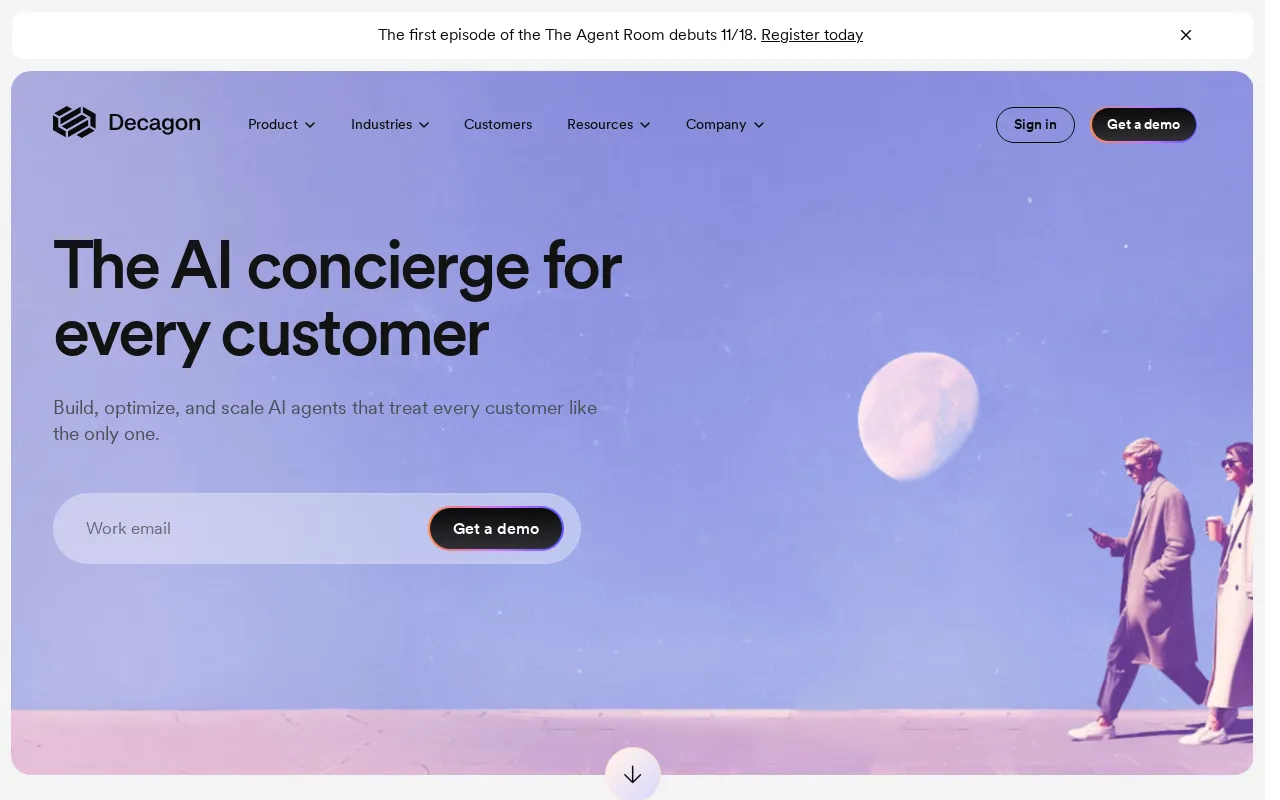
Decagon homepage, November 2026

Decagon is an AI agent platform for large companies that answers customers on chat, email and voice. It works through the help desk or CRM you already run, such as Zendesk, Intercom or Salesforce, and escalates what it can’t solve to your team there.

Best for
Enterprises with a high-volume queue across chat, email and phone, and a support operations team to build and test the AI with Decagon’s engineers.
How it bills
Decagon publishes no prices. Its own pricing post describes two options: a fixed rate for every incoming conversation, or a higher one for each fully resolved conversation, with lower rates for bigger volumes or commitments. Buying starts with “Get a demo”, and the help desk it answers in bills separately.
Free plan
No, buying starts with a demo
3 people, 300 AI replies
Quote only: No published rate: 300 conversations are priced per conversation or per resolution through Decagon’s sales team, and your help desk’s seats come on top.

Pros

  • One AI answers on web chat, SMS, WhatsApp, email and phone, and its voice agent speaks 70+ languages.
  • Your support team writes the AI’s workflows in plain language, as procedures Decagon calls AOPs, then tests and A/B tests changes before rolling them out.
  • Pre-built connections reach Zendesk, Intercom, Salesforce, Gorgias, Kustomer and Gladly, plus Shopify and Stripe Billing for orders and subscriptions.
  • Decagon’s own team works alongside yours during rollout, as its case studies with Rippling and 1-800-Flowers.com describe.

Cons

  • No published price, no free plan and no trial: every path to buying starts with “Get a demo”.
  • It answers inside your help desk, so Decagon is a second bill beside that help desk’s seats.
  • Going live takes weeks: Duolingo was live a month after its first conversations with Decagon, which Decagon calls a quick implementation.
  • On per-conversation pricing, which Decagon says most customers choose, conversations the AI escalates to your team are billed too.

Already on Decagon? See the best Decagon alternatives.

6. Fin

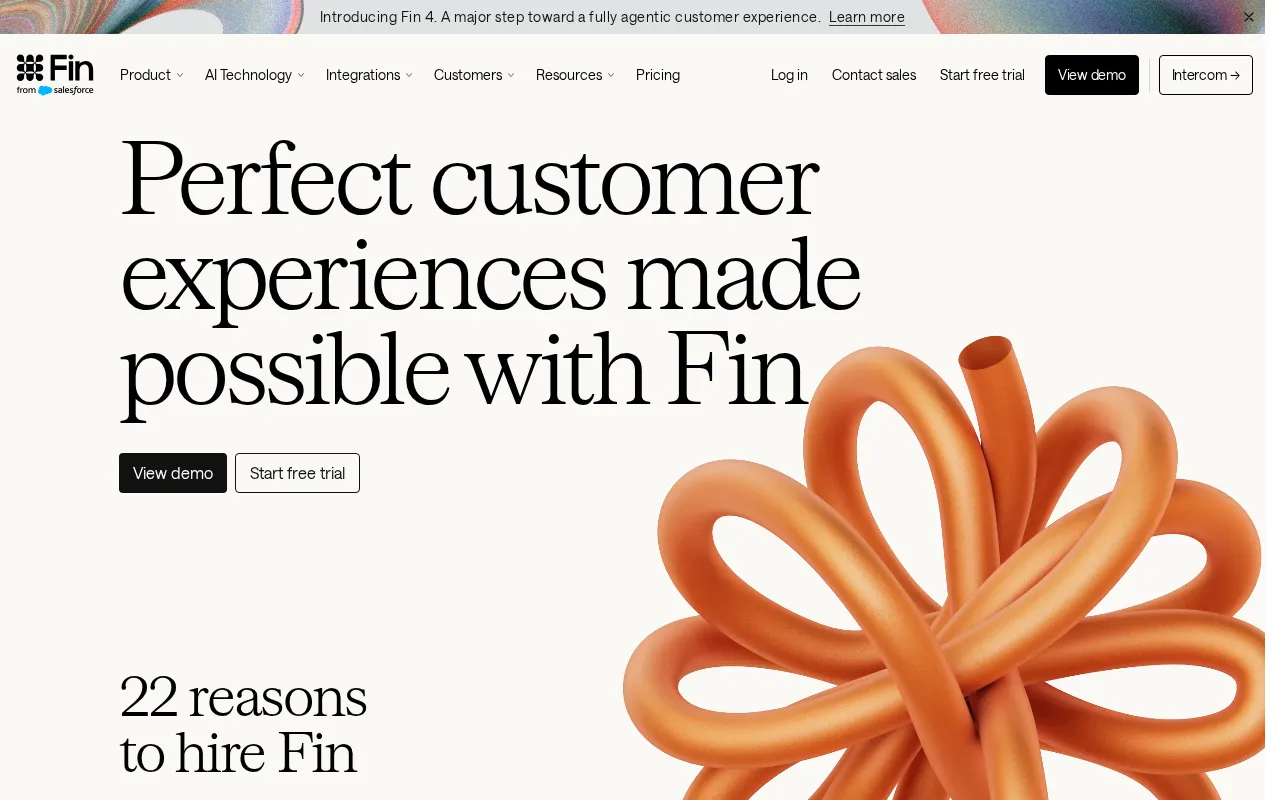
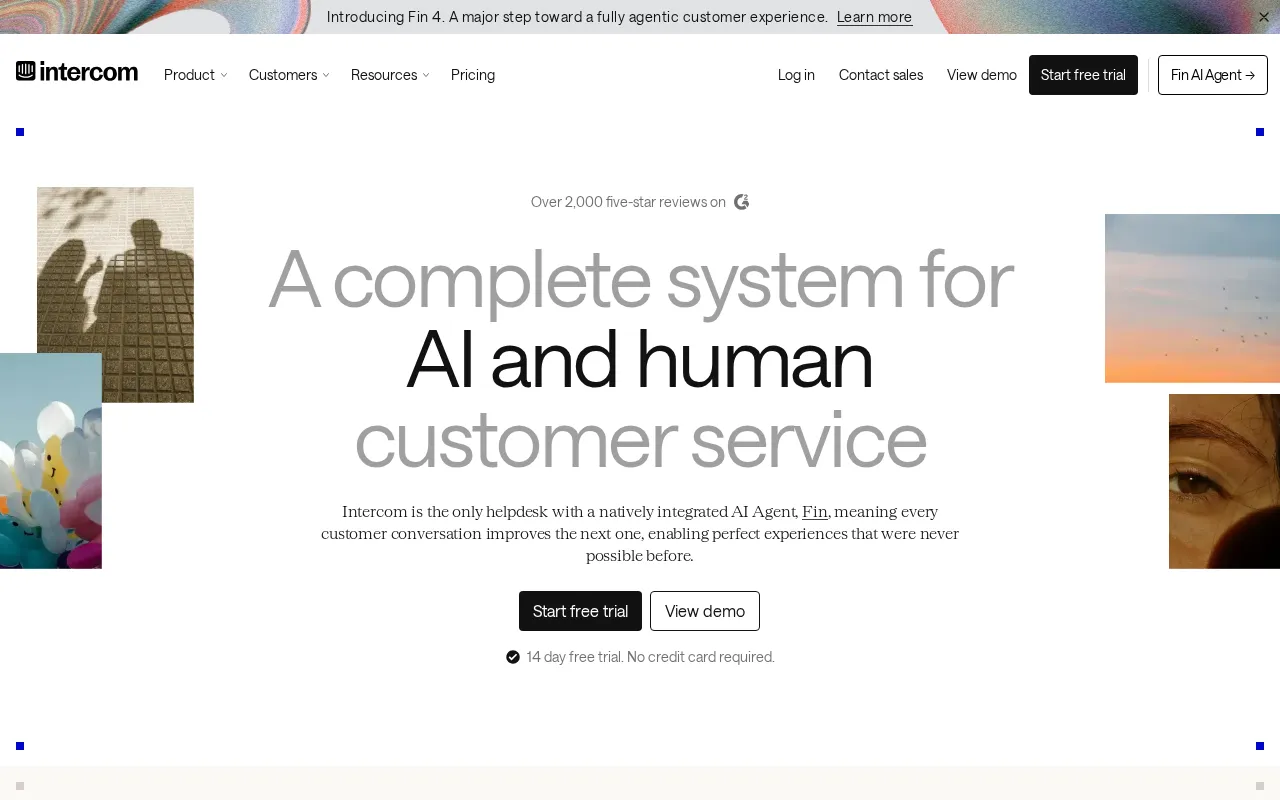
Fin homepage, November 2026

Fin is an AI that answers customers on chat, email, voice and social. It runs inside Intercom, or on top of a help desk you already use, such as Zendesk, Salesforce, HubSpot or Freshdesk, and hands your team what it can’t solve.

Best for
Teams with a large queue on Zendesk, Salesforce, HubSpot or Freshdesk that want a strong AI answering customers without changing help desks.
How it bills
A $49 base plan covers the first 50 outcomes a month, then each costs $0.99, charged at most once per conversation. Unused outcomes don’t carry over. Fin Voice is $1.99 a voice outcome through sales, and your help desk’s seats are billed separately.
Free plan
No, 14-day trial
3 people, 300 AI replies
$297 or more a month: 300 outcomes: $49 for the first 50, then 250 at $0.99. Your help desk’s seats come on top.

Pros

  • It works inside the help desk you already have, so your team keeps it as the system of record.
  • You pay at most once per conversation, and nothing when a customer asks for a person or a Procedure fails.
  • Procedures connect Fin to Stripe and Shopify, so it can check an order and refund it in the same conversation.
  • It answers on chat, email, voice, social and Slack, and on WhatsApp through Freshdesk, with spending limits you set.

Cons

  • Fin is an AI, not a help desk, so its outcomes come on top of your help desk’s seats.
  • An outcome counts when a customer stays silent for 24 hours after Fin’s answer, and when a Procedure ends in a handoff to your team.
  • A Procedure can refund on its own under a threshold you set, with no person approving it.
  • Buying Fin for another help desk starts with “Contact sales” on its pricing page.

Already on Fin? See the best Fin alternatives.

7. Zendesk AI

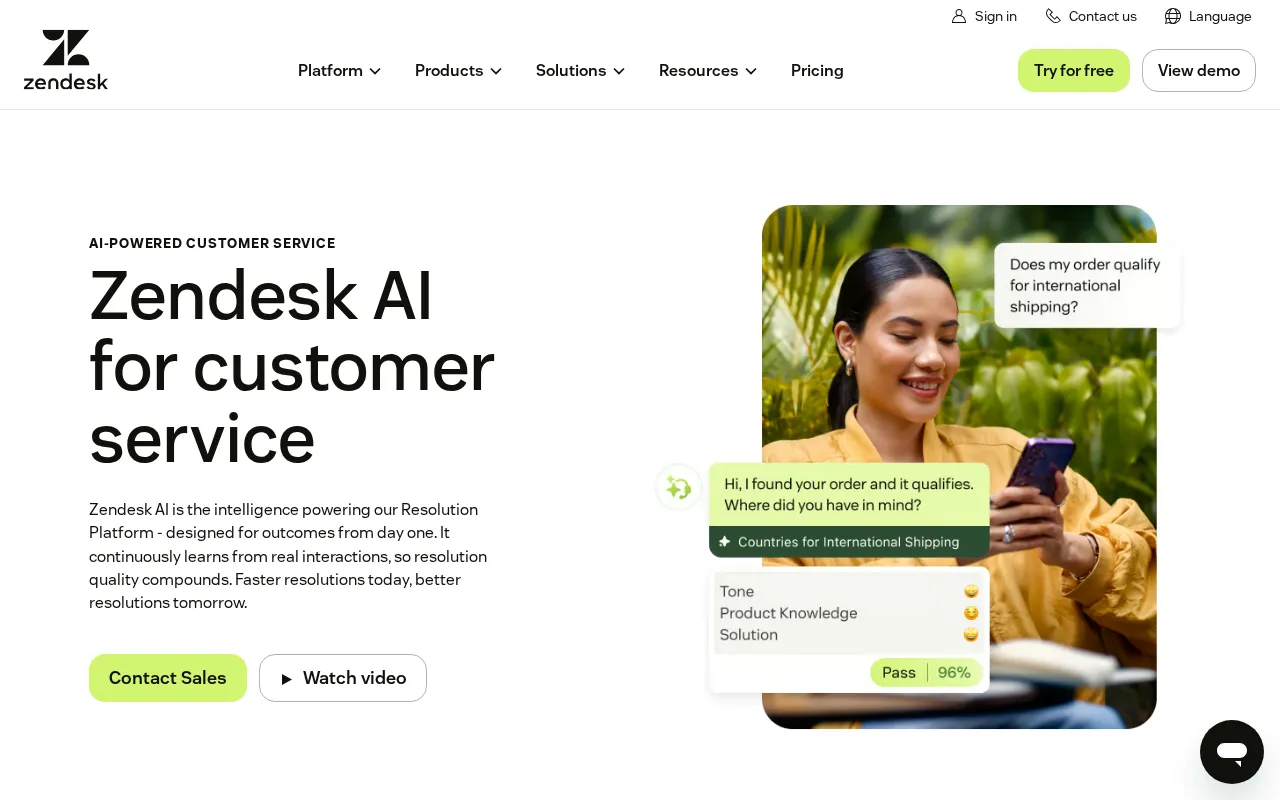
Zendesk AI homepage, November 2026

Zendesk AI is the AI built into Zendesk: AI agents that answer customers on messaging, email and voice, and Copilot, which helps your team. The AI agents come with a Zendesk plan and bill per automated resolution, while Forethought, which Zendesk bought, sells AI agents for other help desks through sales.

Best for
Teams settled on Zendesk that want an AI answering inside it, beside the tickets, triggers and reports they already run.
How it bills
AI agents come with every Zendesk plan, so each teammate needs a seat: $19 on Support Team or $55 on Suite Team, which adds messaging and voice, on annual billing. Each seat includes 5 automated resolutions a month on Team plans and 10 on Suite Professional, up to 10,000 a year, then each costs $1.50 committed or $2.00 pay as you go. Copilot is $50 more an agent.
Free plan
No, 14-day trial
3 people, 300 AI replies
$428 or more a month: 285 automated resolutions at $1.50 committed, past the 15 that 3 seats on a Team plan include. The seats come on top: $19 each on Support Team for email, or $55 on Suite Team for chat.

Pros

  • It answers inside the Zendesk you already run, so tickets, routing, triggers and reports stay where they are.
  • Escalations aren’t billed, and an LLM checks each conversation before it counts as a paid resolution.
  • AI agents answer from your help center, a web crawler or sources like Google Drive, on messaging, email and voice.
  • You can cap the bill by pausing AI agents at your limit, and through the MCP client they can use tools from Stripe’s and other MCP servers.

Cons

  • Zendesk’s own AI agents can’t be bought alone: every teammate needs a Zendesk seat, and resolutions come on top.
  • Accounts are moving to resolution tiers, paid from an allowance of $2 a seat a month on Team plans, up to $5,000 a year, and Zendesk gives tier prices through sales.
  • Each AI agent works on one kind of channel, and AI agents on Support Team need messaging for chat, which comes with Suite Team at $55 a seat.
  • AI agent tickets can’t be exported with Zendesk’s export tools, and it refunds no unused seats or time.

Already on Zendesk AI? See the best Zendesk AI alternatives.

8. Salesforce Service Cloud

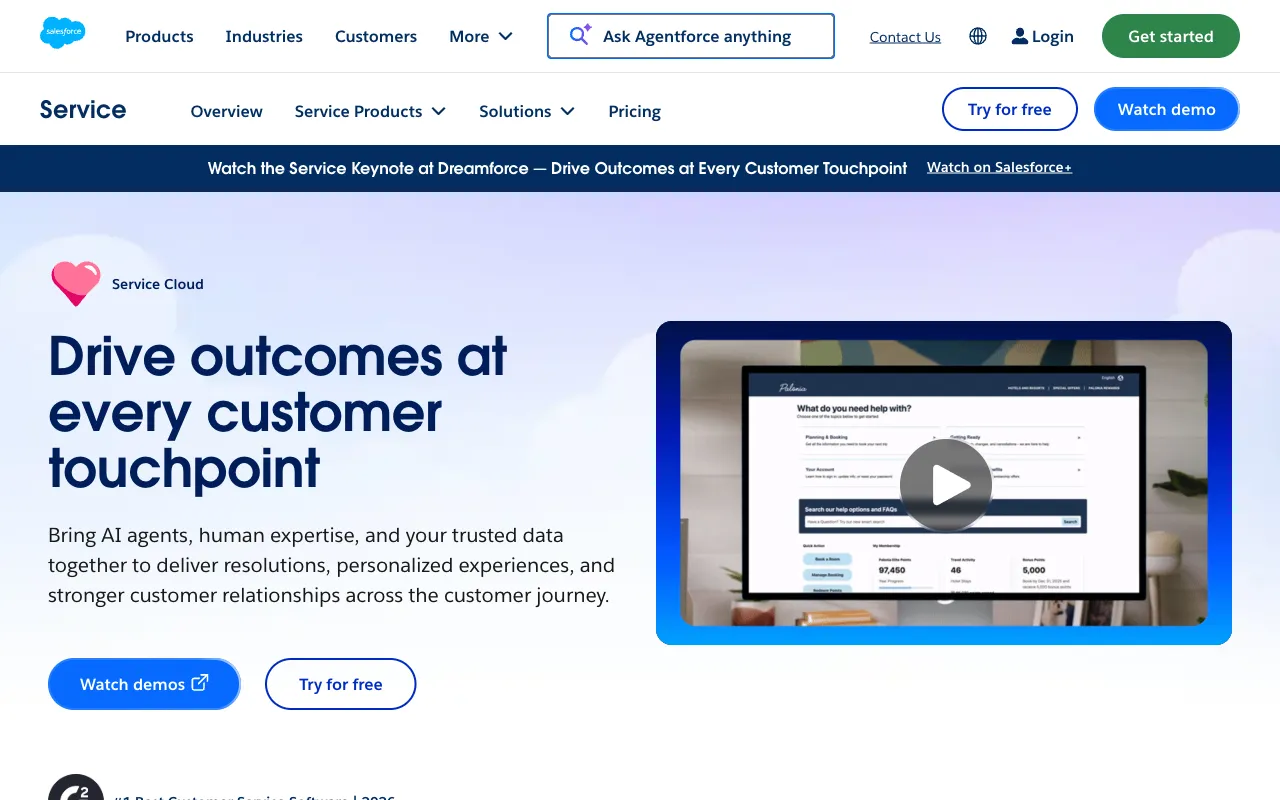
Salesforce Service Cloud homepage, November 2026

Salesforce Service Cloud is an enterprise customer service platform on the Salesforce CRM, with case management, a self-service help center, contact center add-ons, and Agentforce AI agents billed per resolution or conversation.

Best for
Large service teams already on Salesforce that need contact center seats, voice, routing and admins who customize the platform.
How it bills
Per user a month on annual billing: Core is $195, Advanced $395 and Max $550. Starter Suite at $25 and Pro Suite at $100 bundle sales, service and marketing, and transaction fees apply. Agentforce’s help agent costs $2 per resolution, Agentforce for Service $125 more a user, contact center seats $125 a user and voice from $50 a user. Agentforce can instead run on Flex Credits at $500 per 100,000.
Free plan
No, free trial
3 people, 300 AI replies
$1,185 a month: 3 Core users at $195 on annual billing, plus 300 help agent resolutions at $2.

Pros

  • Core brings case management and a self-service help center, and voice and contact center seats can be added on top.
  • Agentforce’s help agent answers on web, portal, messaging and voice from your Salesforce knowledge base, and bills only when it resolves an issue on its own.
  • Hosted MCP servers let Claude query, create and update cases, comments and articles, within the signed-in user’s permissions.
  • AppExchange lists Stripe’s own app and Shopify sync apps tested with Service Cloud.

Cons

  • Core starts at $195 a user a month, billed annually, before any AI.
  • Salesforce’s help agent announcement lists voice, web, portal and messaging, but not email.
  • Agentforce for your reps costs $125 more a user a month, and Enhanced Messaging $75.
  • Unused Flex Credits don’t roll over, and an org can’t mix Flex Credits with per-conversation pricing.

Already on Salesforce Service Cloud? See the best Salesforce Service Cloud alternatives.

9. Kustomer

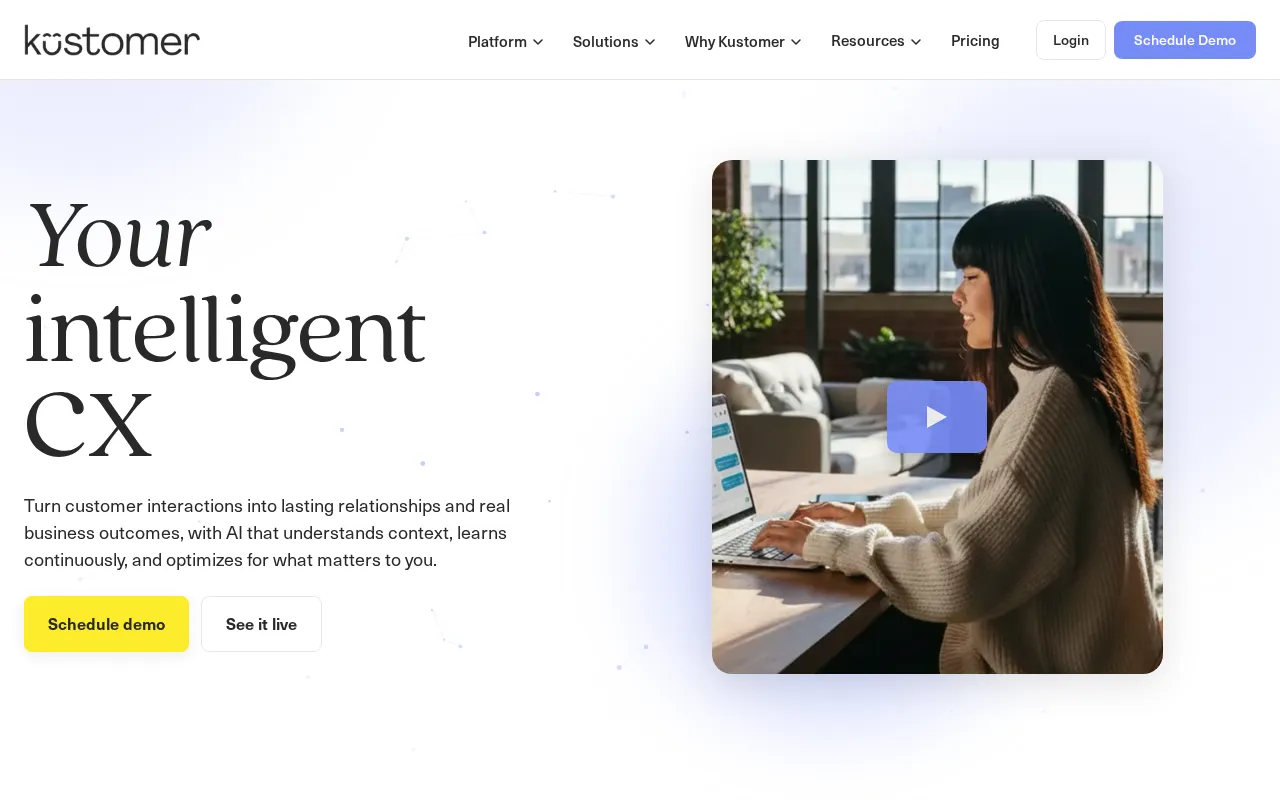
Kustomer homepage, November 2026

Kustomer is a customer service platform built around one timeline per customer, with chat, email, SMS, WhatsApp, voice and social in one place, and Concierge, an AI agent that answers customers.

Best for
Mid-size and large consumer brands that want every order, conversation and channel on one customer timeline, and buy through a sales team.
How it bills
Plan prices are quoted by sales: Enterprise and Ultimate today, with older seat-based and usage-based plans still listed. Published add-ons include Concierge at $0.75 per engaged conversation, Envoy at $50 a user a month, and voice from $0.02 a minute.
Free plan
No, and no self-serve trial
3 people, 300 AI replies
$225 or more a month: 300 Concierge conversations at $0.75, plus a platform price Kustomer quotes only on a sales call.

Pros

  • Chat, email, SMS, WhatsApp, voice, Facebook and Instagram share one timeline for each customer.
  • Concierge answers on chat, email, SMS, WhatsApp and voice, and you decide where it acts alone and where it hands off.
  • Agents can cancel or refund Shopify order items from the customer’s timeline.
  • Built to scale, with up to 300 brands and a 2,000-request-a-minute API on Ultimate.

Cons

  • No plan price is published: you fill in a two-minute assessment, then talk to sales.
  • No free plan and no self-serve trial.
  • Its official MCP server only reads, so your own AI can search conversations but can’t reply, add notes or close.
  • Contracts renew automatically unless you give written notice 30 days before the term ends, and fees are non-refundable.

Already on Kustomer? See the best Kustomer alternatives.

10. Gladly

Gladly homepage, November 2026

Gladly is a customer service platform for retail brands that keeps one lifelong conversation per customer across voice, email, chat, SMS and social media. It now presents itself on gladly.ai as commerce AI, with an AI agent that also helps shoppers buy.

Best for
Large retail brands that want voice, messaging and an AI that sells and serves in one customer timeline.
How it bills
Gladly’s site publishes no prices and sends you to sales. Its Shopify app lists a free plan with 1 seat and 100 AI interactions, and a pay-as-you-go Starter cap plan shown at $250 a month: $120 a team member a month, plus $1.50 per AI Resolution and $0.25 per AI Assist, up to a monthly spending cap you set.
Free plan
Yes on Shopify: 1 seat, 100 AI interactions
3 people, 300 AI replies
$810 or more a month: 3 team members at $120 on the Shopify Starter cap plan, plus 300 AI Resolutions at $1.50. Direct contracts are quoted by sales.

Pros

  • Voice with IVR, SMS, WhatsApp, Instagram and Messenger sit in one customer timeline with email and chat.
  • Gladly AI can look up Shopify orders, change addresses, cancel orders and issue refunds, confirming the amount with the customer first.
  • Its AI also recommends products and lets shoppers check out in chat, before the sale as well as after.
  • A help center built from the same Answers your team and the AI use.

Cons

  • No prices on gladly.ai: direct contracts are quoted by sales, and only the Shopify app lists a price.
  • Each team member costs $120 a month on the Shopify plan, plus $1.50 for each AI resolution.
  • No official MCP server, so your own AI can’t work in Gladly without custom code.
  • The self-serve export covers only the last 7 days; older history needs Gladly Support.

Already on Gladly? See the best Gladly alternatives.

11. Intercom

Intercom homepage, November 2026

Intercom is a customer service help desk with a chat Messenger, a shared inbox, a help center and Fin, its AI agent. Its company renamed itself Fin in May 2026, and Salesforce bought it that September.

Best for
Software and app companies that want chat, email, phone, WhatsApp and SMS in one inbox, with Fin answering across them.
How it bills
Per seat: Essential is $29, Advanced $85 and Expert $132 a seat a month on annual billing ($39, $99 and $139 monthly), and new customers pay $19 for Essential on annual billing. Fin costs $0.99 for each outcome, and WhatsApp, SMS and phone are billed by use.
Free plan
No, 14-day trial
3 people, 300 AI replies
$354 a month: 3 Essential seats at $19, the new-customer price on annual billing (list $29), plus 300 Fin outcomes at $0.99.

Pros

  • Chat, email, phone, WhatsApp, SMS, Slack, Facebook and Instagram all arrive in one inbox.
  • Fin answers on email, live chat and phone, and is charged once per conversation however many questions it answers.
  • Agents can refund or cancel a Shopify order from the inbox sidebar, and the Stripe app shows subscriptions mid-conversation.
  • Its official MCP server can add internal notes and write and publish help center articles, not only read.

Cons

  • Every teammate who replies needs a paid seat, and Fin adds $0.99 an outcome on top.
  • An outcome also counts when a customer simply stops asking after Fin’s answer, or when a Fin workflow hands the conversation to your team.
  • Its MCP server can’t reply to customers, assign or close conversations, and doesn’t serve workspaces hosted in Australia.
  • No free plan, and an annual plan cancelled early gets no prorated refund.

Already on Intercom? See the best Intercom alternatives.

Why people leave Capacity

Prices without amounts

The pricing page promises one predictable price, then lists Core, Pro and Enterprise and the units AI is billed in, per chat response, voice minute or SMS, with no figure for any of them. Its buttons lead to “Talk to us” or a demo. Capacity pricing, .

A trial you have to request

There is no free plan. The trial page offers 30-day access to build a chat bot, behind a form that asks for your phone number, employee range, use case and how soon you plan to roll it out. Capacity free trial, .

The help desk costs a higher tier

Core covers the AI and knowledge base. The help desk, live chat and inbox start on Pro, and campaigns and CRM only on Enterprise. Capacity pricing, .

Weeks of rollout

Capacity says digital channels typically go live in weeks once standard connectors are in place, and voice in 6 to 8 weeks, with a partner-led implementation team. Capacity AI agents, .

Many products under one name

Capacity’s support page sends customers of Denim Social, Lucy, LumenVox, Textel, Verbio and other brands now part of Capacity to their own support sites, while it continues to build one. Capacity support, .

Features compared

A check means the vendor’s own pages say a plan includes it. Capacity is in the last row for comparison.

ToolEmailLive chatWhatsAppVoiceHelp centerAI that answers customersShopifyStripeFree planSignup without a sales call
Rinhelp
Ada
Kore.ai
Sierra
Decagon
Fin
Zendesk AI
Salesforce Service Cloud
Kustomer
Gladly
Intercom
Capacity

What your AI can do in each tool

Connect Claude, ChatGPT or your own AI agent through the vendor’s official MCP server, and this is what it can do of 11 everyday actions: search and read conversations, reply to a customer, add an internal note, assign, close or reopen, search the help center, write or update an article, publish an article, create a saved reply, look up an order, refund or cancel.

ToolThrough official MCPWhat it can doMoney moves wait for a teammate
Rinhelp11 of 11Search and read conversations, reply to a customer, add an internal note, assign, close or reopen, search the help center, write or update an article, publish an article, create a saved reply, look up an order, refund or cancelYes, a teammate approves first
Ada3 of 11Search and read conversations, search the help center, write or update an articleNo refunds or cancellations through MCP
Kore.ai1 of 11Search and read conversationsNo refunds or cancellations through MCP
Sierra0 of 11No official MCP server, or nothing from this listNo refunds or cancellations through MCP
Decagon0 of 11No official MCP server, or nothing from this listNo refunds or cancellations through MCP
Fin0 of 11No official MCP server, or nothing from this listNo refunds or cancellations through MCP
Zendesk AI0 of 11No official MCP server, or nothing from this listNo refunds or cancellations through MCP
Salesforce Service Cloud6 of 11Search and read conversations, add an internal note, assign, close or reopen, search the help center, write or update an articleNo refunds or cancellations through MCP
Kustomer1 of 11Search and read conversationsNo refunds or cancellations through MCP
Gladly0 of 11No official MCP server, or nothing from this listNo refunds or cancellations through MCP
Intercom5 of 11Search and read conversations, add an internal note, search the help center, write or update an article, publish an articleNo refunds or cancellations through MCP
Capacity0 of 11No official MCP server, or nothing from this listNo refunds or cancellations through MCP

More on each MCP server, and connectors from other companies, which don’t count:

  • Ada: Ada’s MCP server manages the AI rather than the queue: it reads transcripts and searches or stages knowledge articles, which feed Ada’s answers instead of a public help center. It can’t reply to customers, and write tools need an owner or admin.
  • Kore.ai: Kore.ai’s MCP server is for building and debugging agents: it creates and deploys them, runs evaluations, and reads session history and traces. It has no tool to reply to a customer, assign or close, and its agents can also call MCP servers your company runs.
  • Sierra: Sierra can publish your agent to ChatGPT as an app over MCP, so customers reach it there. We found no official MCP server that lets Claude or ChatGPT work in Sierra’s conversations for your team.
  • Decagon: Decagon’s AI calls MCP servers your company runs to look up data and take actions. We found no official MCP server that lets Claude or ChatGPT work in Decagon itself.
  • Fin: Intercom’s MCP server reads Intercom data in US and EU workspaces. We found no official MCP server for Fin on another help desk.
  • Zendesk AI: Zendesk announced an MCP server for outside AI tools in May 2026, for early access that summer, and has published no docs for it. Its MCP client, generally available since August 10, 2026, works the other way, letting Zendesk’s AI agents call tools on other MCP servers.
  • Salesforce Service Cloud: Salesforce’s hosted SObject servers work on any record the user can reach, so cases, case comments and knowledge articles go through general record tools rather than help desk ones. The Headless 360 server is in beta.
  • Kustomer: kusty, a command-line tool Kustomer has previewed but not released, will run as a local MCP server that can also write.
  • Gladly: Third parties such as Truto sell Gladly connectors; Gladly itself has none.
  • Intercom: Workspaces with Fin Operator get five more MCP tools, which change Fin’s setup rather than conversations.
  • Capacity: We found no official MCP server for Capacity. Its developer platform calls REST, SOAP and XML APIs from workflows and AI agents, and its ticketing API creates and updates tickets.

Pricing at three sizes

What each tool costs a month in US dollars, with AI answering, and how each total adds up. Each AI reply counts as one resolved conversation.

Tool3 people, 300 AI replies5 people, 1,000 AI replies10 people, 3,000 AI replies
Rinhelp$49Pro for the whole workspace, using 300 of its 5,000 AI replies; Free covers your team if you don’t need AI replies.$49Pro for the whole workspace, using 1,000 of its 5,000 AI replies.$49Pro for the whole workspace, using 3,000 of its 5,000 AI replies.
AdaQuote onlyAda publishes no price, so 300 conversations are quoted by sales, and the help desk your team takes handoffs in bills its own seats.Quote onlyPricing is through sales after a demo, with no published rate for 1,000 conversations, plus the seats of the help desk Ada hands off to.Quote onlyPricing for 3,000 conversations is through Ada’s sales team only, and your team’s help desk is a separate bill.
Kore.aiQuote onlyKore.ai prints no rate, so 300 conversations are priced by its sales team, and the contact center your people answer handoffs in is a separate bill.Quote onlyNo published price for 1,000 conversations: the quote comes after a demo, plus the seats of the desktop Kore.ai transfers customers to.Quote only3,000 conversations sit on a custom or annual contract that only Kore.ai quotes, with your contact center billed on top.
SierraQuote onlySierra prints no rate, so the outcomes in 300 conversations are priced in a deal with its team, and the contact center your people answer handoffs in costs extra.Quote only1,000 conversations are billed per agreed outcome at a rate only Sierra’s team quotes, on top of the tools your care team uses for handoffs.Quote onlyFor 3,000 conversations Sierra sets the outcome rate in its sales process, and your contact center stays a bill of its own.
DecagonQuote onlyNo published rate: 300 conversations are priced per conversation or per resolution through Decagon’s sales team, and your help desk’s seats come on top.Quote only1,000 conversations are quoted after a demo, with no price on Decagon’s site, plus the seats of the help desk it escalates to.Quote onlyDecagon sets the rate for 3,000 conversations in a sales conversation, and the help desk your team works in is billed separately.
Fin$297 or more300 outcomes: $49 for the first 50, then 250 at $0.99. Your help desk’s seats come on top.$990 or more1,000 outcomes: $49 for the first 50, then 950 at $0.99, plus the seats your help desk charges.$2,970 or more3,000 outcomes: $49 for the first 50, then 2,950 at $0.99. The help desk Fin answers in bills its seats on top.
Zendesk AI$428 or more285 automated resolutions at $1.50 committed, past the 15 that 3 seats on a Team plan include. The seats come on top: $19 each on Support Team for email, or $55 on Suite Team for chat.$1,463 or more975 automated resolutions at $1.50 beyond the 25 included with 5 Team seats, which are billed on top.$4,425 or more2,950 automated resolutions at $1.50 beyond the 50 that 10 Team seats include. Seats are extra, from $19 an agent on annual billing.
Salesforce Service Cloud$1,1853 Core users at $195 on annual billing, plus 300 help agent resolutions at $2.$2,9755 Core users at $195, plus 1,000 help agent resolutions at $2.$7,95010 Core users at $195, plus 3,000 help agent resolutions at $2.
Kustomer$225 or more300 Concierge conversations at $0.75, plus a platform price Kustomer quotes only on a sales call.$750 or more1,000 Concierge conversations at $0.75, plus the unpublished platform price.$2,250 or more3,000 Concierge conversations at $0.75, plus the unpublished platform price.
Gladly$810 or more3 team members at $120 on the Shopify Starter cap plan, plus 300 AI Resolutions at $1.50. Direct contracts are quoted by sales.$2,100 or more5 team members at $120 plus 1,000 AI Resolutions at $1.50, on the Shopify plan.$5,700 or more10 team members at $120 plus 3,000 AI Resolutions at $1.50, on the Shopify plan.
Intercom$3543 Essential seats at $19, the new-customer price on annual billing (list $29), plus 300 Fin outcomes at $0.99.$1,0855 Essential seats at $19, the new-customer price on annual billing (list $29), plus 1,000 Fin outcomes at $0.99.$3,16010 Essential seats at $19, the new-customer price on annual billing (list $29), plus 3,000 Fin outcomes at $0.99.
CapacityQuote onlyCapacity shows no rates, so 300 conversations cost a platform fee plus each AI response, both quoted after a demo.Quote onlyNo published price for 1,000 conversations: the proposal sets the platform tier and the per-response rate for your volume.Quote only3,000 conversations would earn volume discounts on each response, but only Capacity’s team can say what they come to.

The best Capacity alternative for each kind of team

Best Capacity alternative for a few people answering email and chat: Rinhelp

Capacity’s trial is a form that asks for your phone number, company size and rollout timeline. Rinhelp lets anyone sign up, free for 3 teammates with 50 AI replies to try Rin, then $49 a month for the workspace.

Best Capacity alternative for one enterprise AI on every channel: Ada

Ada covers most of what Capacity’s AI agents do: chat, email, phone, WhatsApp and SMS, with handoffs to Salesforce, Zendesk or a contact center. It also sells through a demo, and its MCP server lets Claude read transcripts and stage article edits.

Best Capacity alternative for building agents for customers and staff: Kore.ai

Kore.ai, like Capacity, serves both customer service and internal HR and IT help from one platform. Its builders define agents, run evaluations and trace sessions, and people pick up escalations in Genesys, Five9 or Salesforce.

Best Capacity alternative for paying by outcome: Sierra

Sierra bills for results, such as a resolved conversation or a saved cancellation, and says escalations are usually free. Capacity charges for each AI response, voice minute or text instead.

Best Capacity alternative for AI inside the help desk you keep: Decagon

Decagon answers chat, email and voice from inside Zendesk, Intercom or Salesforce, so tickets and history stay where your team already works. Its support staff write procedures in plain language, priced after a demo.

Best Capacity alternative for an AI rate printed on the site: Fin

Fin is $0.99 per outcome after a $49 base plan with 50 included, on top of Zendesk, Salesforce or HubSpot. You can start a trial without a call.

Best Capacity alternative for Zendesk shops: Zendesk AI

If Capacity’s email agent sits in front of Zendesk today, Zendesk’s own AI agents answer there without a second vendor. Each Team seat includes 5 automated resolutions a month, then $1.50 each on a commitment.

Best Capacity alternative for teams whose records live in Salesforce: Salesforce Service Cloud

Salesforce Service Cloud keeps cases, the CRM and Agentforce together, with a $2 rate for each help agent resolution. Core seats are $195 a user a month on annual billing, so it suits a large team already paying for Salesforce.

Best Capacity alternative for one record of every channel per shopper: Kustomer

Kustomer is a help desk with chat, email, SMS, WhatsApp and voice on one timeline per customer. Concierge, its AI agent, is $0.75 per engaged conversation, though the platform is still quoted by sales.

Best Capacity alternative for retailers with busy phones: Gladly

Gladly puts voice, SMS, chat and email in one lifelong conversation for each customer, with AI and people in the same tool. Its Shopify app lists $120 a team member a month and $1.50 per AI resolution.

Best Capacity alternative for software companies: Intercom

Intercom pairs its inbox and help center with Fin, and adds phone, WhatsApp and SMS billed by use. New customers pay $19 a seat for Essential on annual billing, plus $0.99 per Fin outcome.

When Capacity is still the right choice

Stay with Capacity ifSwitch if
Your contact center takes thousands of calls, and you want an AI voice agent in front of RingCentral or NICE.Customers reach you by email and live chat, and you have no phone queue.
You send appointment, payment or order reminders by SMS, voice and WhatsApp, and replies should reach an AI.You only answer customers who write to you first.
Your answers live in SharePoint, Salesforce and ServiceNow, for staff as well as customers.Your answers live in a help center and on your website.
You want coaching, transcription and automated QA for a large team of people on the phones.Your team is a handful of people who read each other’s replies.

Moving from Capacity to Rinhelp

Your chat history stays in Capacity. There’s nothing to move: add your docs as a knowledge source and Rin answers from them on day one.

See how Rin answers

Questions about Capacity and switching

How much does Capacity cost?

Capacity doesn’t publish amounts. You pay a yearly platform fee for Core, Pro or Enterprise, sized by number of users, plus usage: each chat or email response, each voice minute and each SMS message. Agent assist is billed per hour of agent time, and LLM token costs are included.

Does Capacity have a free plan?

No. Its trial page lets you request 30 days of access to build a chat bot, through a form with your phone number, company size and rollout timeline. Rinhelp is free for 3 teammates with 50 AI replies, and you sign up yourself.

Is Capacity a help desk?

On Pro it includes one: a ticketing help desk, live chat and an inbox that holds tickets, SMS, WhatsApp, chat and voice logs. On Core it is the AI and knowledge layer alone, and its AI agents can also hand off to Zendesk, Salesforce or another help desk you keep.

Which channels can Capacity’s AI answer on?

Chat on your website, intranet, Microsoft Teams or Slack, plus voice, SMS and email. WhatsApp replies reach its AI agents, and a separate social agent covers Instagram, Facebook, LinkedIn and X. Rinhelp covers email and live chat only.

Where is my conversation history if I leave Capacity?

In Capacity’s inbox, or in the help desk its AI handed off to. Its API can pull help desk data out, and its dashboards export to CSV. Rin doesn’t need old transcripts to start: it answers from your help center and website.

Can I connect Claude or ChatGPT to Capacity?

Not through MCP: we found no official server. Inside Capacity you can pick GPT-4.1, Gemini or Claude Sonnet as the model behind an AI agent, and its developer platform calls your own APIs. Rinhelp’s MCP server lets your AI agent reply, assign and close.

Can Capacity look up a Shopify order or a Stripe payment?

Capacity says it integrates with Shopify, BigCommerce and Magento, and that it can handle refunds and returns. Stripe appears as a way to take payments in its scheduling tool. In Rinhelp, Shopify and Stripe connect from settings, and a refund or cancellation waits for a teammate.

How long does it take to go live on Capacity?

Weeks for chat and SMS, and 6 to 8 weeks for voice, with an implementation team beside you. Its chat agent can go live in days when your knowledge is ready. Rinhelp needs no implementation team: sign up, forward your support address and paste the chat widget.

What is the cheapest Capacity alternative?

Rinhelp, free for 3 teammates and $49 a month with 5,000 AI replies. Among enterprise AI agents with a printed rate, Kustomer’s Concierge is $0.75 per engaged conversation and Fin is $0.99 per outcome, each beside a help desk you pay for.

Does Rinhelp take phone calls or send SMS campaigns?

No. Rinhelp has no phone line, SMS or outbound campaigns. If calls and texts are much of your work, Capacity, Ada, Kustomer or Gladly keep them with the AI.

How we picked and checked

We listed the tools a team leaving Capacity weighs most often, and only tools we keep checked facts for. Rinhelp is first because it is our product and we wrote this page, so check each figure against the vendor’s own page before you decide.

Costs are list prices in US dollars for three team sizes, on the cheapest plan that covers them, counting each AI reply as one resolved conversation. Features count only when the vendor’s own pages say a plan includes them. The AI column counts actions an official MCP server from the vendor can take, out of 11, and leaves third-party connectors out.

We checked every source below on 9 November 2026 unless it shows another date.

Why people leave Capacity

Rinhelp

Checked

Ada

Kore.ai

Sierra

Decagon

Fin

Checked

Zendesk AI

Checked

Salesforce Service Cloud

Kustomer

Checked

Gladly

Checked

Intercom

Capacity

Try Rinhelp next to Capacity.

Start free with up to 3 teammates and 50 AI replies. Keep Capacity running until you’re sure.

Start free